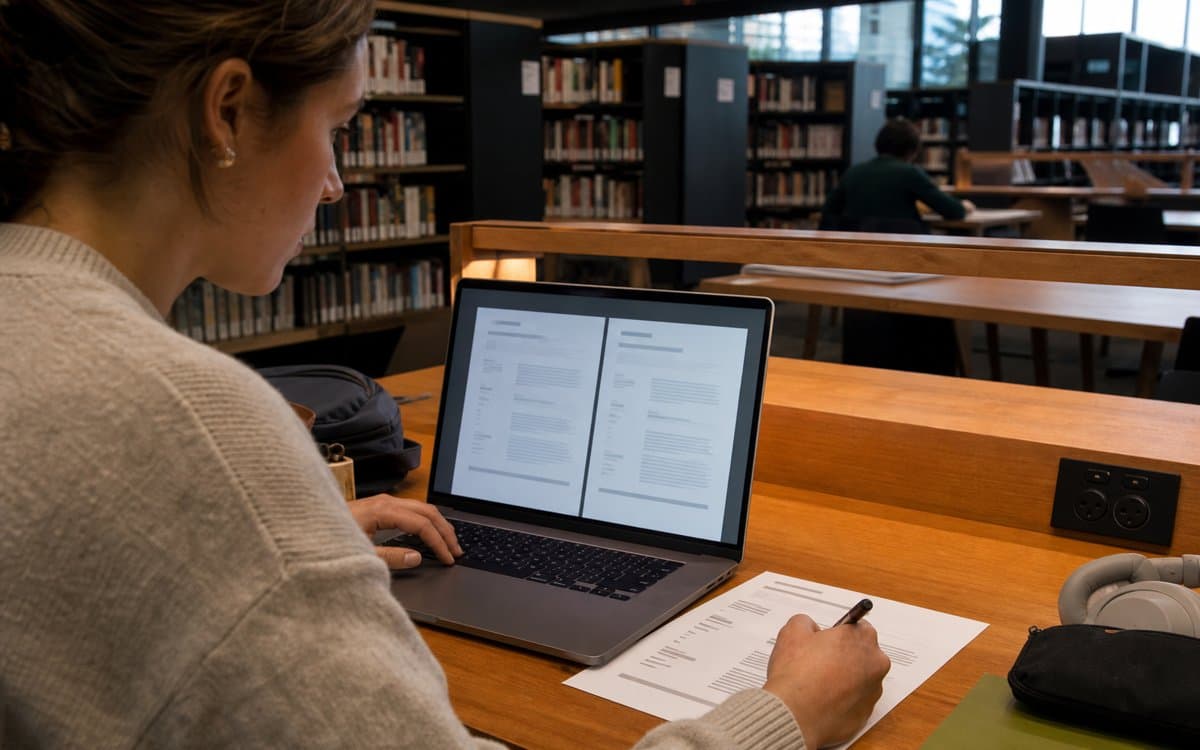
When I first landed in Australia, I spent three weeks crafting what I thought was the perfect resume. Every word polished. Every bullet point precise. Every accomplishment carefully quantified.
I got zero responses.
Then ChatGPT launched, and suddenly everyone's talking about ai resume writing like it's the silver bullet that'll solve all our job search problems. Here's what nobody tells you: AI can absolutely help you write a better resume — but only if you use it strategically, not as a replacement for your brain.
After helping hundreds of immigrants land roles at companies like Commonwealth Bank, Telstra, and ANZ, I've seen the good, the bad, and the downright robotic when it comes to AI-powered resumes. Let me show you how to harness AI without sounding like you were assembled in a factory.
The Real Problem with AI Resume Writing
Most people use AI like a magic wand. They dump their work history into ChatGPT, ask for a "professional resume," and expect miracles. What they get instead is corporate word salad that screams "I let a robot write this."
Picture a business analyst job seeker who lets AI generate their whole resume. The result is often technically perfect but completely soulless. Every achievement starts with "Successfully managed" or "Effectively coordinated." The language is so generic that it could describe anyone in any industry.
The hiring manager reading your resume isn't looking for corporate poetry. They're trying to answer one question: "Can this person solve my specific problems?" When your resume sounds like every other AI-generated document crossing their desk, the answer becomes "probably not."
Here's the thing about AI skills that actually get you hired in Australia: they're not about using AI to do everything for you. They're about using AI to enhance your human insights and experiences.
The biggest mistake I see? People think AI resume writing means letting AI do the thinking. Wrong. AI should amplify your thinking, not replace it.
How to Use AI Resume Writing Without Losing Your Soul
Start with Your Stories, Not AI Templates
Before you touch any AI tool, spend 30 minutes writing down your actual accomplishments. Not job descriptions — real stories about problems you solved, changes you implemented, results you delivered.
For example, imagine a nurse moving into business analysis. Instead of writing that she "performed data analysis tasks", she could explain how she identified medication errors in patient records and helped her hospital reduce the risk of costly incidents.
That's a story. That's specific. That's memorable.
Now, here's where AI becomes powerful: feed your stories to ChatGPT and ask it to help you articulate the impact differently. Don't ask for generic improvements. Ask targeted questions:
- "How can I quantify this healthcare process improvement for a business analyst role?"
- "What metrics would make this cost-saving initiative more compelling?"
- "How do I translate this nursing experience into business language?"
Use AI to Bridge Industry Language Gaps
This is where ai resume writing becomes genuinely valuable for immigrants. You might have incredible experience, but you're not sure how to translate it into Australian corporate speak.
I use this prompt template with our students:
"I worked as [your role] in [your country] where I [specific accomplishment]. I'm applying for [target role] in Australia. Help me reframe this experience using terminology and metrics that Australian hiring managers in [industry] would recognize and value."
The AI helps with language translation, not story fabrication. You're not asking it to invent achievements — you're asking it to help you communicate your real achievements more effectively.
Let AI Optimize for ATS Without Losing Personality
Applicant Tracking Systems (ATS) are real, but they're not the resume killers everyone thinks they are. The key is strategic keyword integration, not keyword stuffing.
Here's my process: 1. Find 3-5 job postings for your target role 2. Extract the most common requirements and technical terms 3. Ask AI: "Help me naturally integrate these keywords into my existing accomplishments: [paste keywords]" 4. Review every suggestion and only keep what feels authentic
The goal isn't to game the system — it's to speak the language of your industry while maintaining your unique value proposition.
The Strategic Framework for AI-Enhanced Resume Creation
Phase 1: Content Creation (Human-Led)
Start with a brain dump. Write everything you've accomplished in the last 5-7 years. Don't worry about format or language — just get your stories on paper.
For each accomplishment, capture: - Situation: What was the challenge or context? - Action: What specific steps did you take? - Result: What changed because of your actions?
This is the foundation that AI will help you refine, not create from scratch.
Phase 2: AI Refinement (Tool-Assisted)
Now bring in the AI. But be specific with your prompts:
"I improved a reporting process at my company. Here's what I did: [detailed explanation]. Help me write this as a compelling bullet point for a data analyst resume, focusing on the technical skills and business impact."
Not: "Write me a resume bullet point about improving processes."
The difference? Context. Specificity. Your actual experience guiding the AI's output.
Phase 3: Human Review (Critical)
Every AI suggestion gets filtered through your judgment: - Does this sound like something I would actually say? - Would I be comfortable explaining this in detail during an interview? - Does this accurately represent my experience level?
If you can't confidently discuss any item on your resume for 5 minutes, remove it.
The opportunities in AI career opportunities Australia 2026 are real, but they go to people who can demonstrate genuine expertise, not AI-generated buzzwords.
Advanced AI Resume Writing Techniques
Industry-Specific Optimization
Different industries value different things. Use AI to understand these nuances:
For tech roles: "Help me emphasize the technical complexity and scalability of this project for a software engineer position."
For business roles: "Help me reframe this technical project focusing on stakeholder management and business outcomes for a project manager role."
For consulting roles: "Help me highlight the client impact and methodology of this engagement for a management consultant position."
Cultural Translation
This is where AI becomes incredibly valuable for immigrants. You can ask:
"I managed a team of 15 people in Nigeria's banking sector. Help me translate this experience for Australian financial services, highlighting leadership competencies that resonate with local hiring managers."
The AI helps bridge cultural and professional context gaps that might not be obvious to you.
Dynamic Customization
Create a master resume with AI's help, then use it to quickly customize for specific opportunities:
"Here's my master resume and here's the job posting. Help me identify which accomplishments to emphasize and how to adjust the language to match their priorities."
This approach saves time while ensuring each application feels targeted and relevant.
What Not to Do: The AI Resume Traps
Learn to use AI tools to accelerate your career
Our courses teach practical AI skills that give you an edge in the Australian job market.
Explore AI CoursesDon't Let AI Write Your Summary
I've seen too many AI-generated professional summaries that sound like this: "Dynamic, results-oriented professional with a proven track record of driving strategic initiatives and delivering innovative solutions."
What does that even mean? Nothing. It's corporate word soup.
Your summary should sound like you explaining your value in 30 seconds to someone at a networking event. Use AI to refine your natural voice, not replace it with generic corporate speak.
Don't Trust AI with Technical Accuracy
AI doesn't understand the nuances of your expertise. It might suggest you have experience with tools you've never used or overstate your proficiency in areas where you're still learning.
Every technical skill, software, or methodology on your resume should pass this test: "Could I teach someone else how to do this tomorrow?" If not, it doesn't belong there.
Don't Ignore the Conversation Factor
Your resume isn't just a document — it's a conversation starter. Every line should set you up for interesting interview discussions.
If you're exploring AI side hustle ideas Australia, make sure your resume reflects the entrepreneurial thinking that drives those opportunities, not just the technical skills.
The Future of AI-Assisted Job Hunting
Here's where this gets interesting: the companies worth working for are also using AI in their hiring processes. They're not just looking for people who can use ChatGPT to write bullet points — they want people who can think strategically about when and how to use these tools.
Your resume should demonstrate that strategic thinking. Show don't just that you can use AI, but that you can use it wisely.
I've seen this play out in our business analyst cohort. The students who get hired aren't necessarily the ones with the most polished resumes — they're the ones whose resumes demonstrate clear thinking, specific results, and authentic expertise.
The same principles apply whether you're using AI tools for job seekers or building your skills with no-code AI tools. The technology amplifies your capabilities; it doesn't replace your judgment.
Building Your AI-Enhanced Resume: A Step-by-Step Process
Week 1: Foundation Building
Spend the first week documenting your actual experiences. Use the STAR method (Situation, Task, Action, Result) for every major accomplishment. Don't worry about perfect language — focus on specific, quantifiable outcomes.
Create a spreadsheet with columns for: - Project/Achievement - Context/Challenge - Your specific actions - Measurable results - Skills demonstrated
This becomes your content library that AI will help you refine and optimize.
Week 2: AI Collaboration
Now bring in your AI tools. For each accomplishment, use prompts like:
"Here's a project I completed: [detailed description]. Help me write this as a compelling resume bullet point that highlights [specific skills] for a [target role] position."
Test different AI tools — ChatGPT, Claude, Bard — and see which gives you outputs that feel most authentic to your voice.
Week 3: Industry Alignment
Research your target roles and companies. Use AI to help translate your experiences into industry-relevant language:
"I'm targeting business analyst roles at Australian banks. Help me identify which of these accomplishments would be most relevant and how to present them."
Week 4: Testing and Refinement
Apply to a few positions and track results. If you're not getting responses, don't just blame the market — analyze your resume's effectiveness.
Use AI to help you identify potential issues: "Here's my resume and here's a job posting I applied to but didn't hear back from. What might be the disconnect?"
Measuring Success: Beyond the Algorithm
The real test of your AI-enhanced resume isn't whether it gets past the ATS — it's whether it accurately represents your value and sets you up for meaningful conversations.
I track success differently than most career coaches. Yes, we measure response rates and interview conversions. But we also measure:
- Do you feel confident discussing everything on your resume?
- Are the interviews leading to good cultural fits?
- Are you attracting opportunities that align with your career goals?
AI can help optimize your resume for visibility, but your human judgment determines whether that visibility leads to the right opportunities.
The Integration Challenge
Here's what I've learned from watching hundreds of students navigate this process: the most successful people don't just use AI for resume writing — they integrate it into their entire job search strategy.
Your resume is one touchpoint. Your LinkedIn profile, your interview responses, your portfolio, your networking conversations — they all need to tell the same authentic story.
Use AI consistently across all these touchpoints, but always with your strategic input guiding the process. The goal is amplified authenticity, not artificial perfection.
---
You might also like
Frequently Asked Questions
Can AI completely write my resume for me?
Technically yes, but strategically no. AI can generate a resume that looks professional and might even get past initial screenings. But it won't represent your unique value proposition, and you'll struggle in interviews when asked to elaborate on generic accomplishments. Use AI to enhance your real experiences, not fabricate them.
Which AI tool is best for resume writing?
I've tested ChatGPT, Claude, Bard, and several resume-specific AI tools. ChatGPT generally produces the most natural-sounding language, but the tool matters less than your prompting strategy. Focus on giving detailed context and asking specific questions rather than looking for the perfect AI solution.
How do I know if my AI-enhanced resume sounds too robotic?
Read it out loud. If you wouldn't naturally speak those words in a conversation, they don't belong on your resume. Also, ask yourself: "Could I confidently discuss every point on this resume for 5 minutes?" If not, revise until you can.
Should I mention AI skills on my resume?
Only if they're relevant to your target role and you can demonstrate real proficiency. Don't just list "ChatGPT" as a skill — show how you've used AI tools to solve actual business problems or improve processes. The focus should be on outcomes, not tools.
How often should I update my AI-enhanced resume?
Update your content library every quarter with new accomplishments and experiences. Use AI to help you refine the language as you apply to different roles, but avoid constant tinkering. A well-crafted, authentic resume performs better than a frequently modified one.
The future belongs to professionals who can thoughtfully integrate AI into their career development without losing their human edge. Your resume is just the beginning of that journey.
Ready to build the skills that actually get you hired in Australia's evolving job market? Explore our programs at SyncSkills and discover how to leverage AI strategically in your career development.