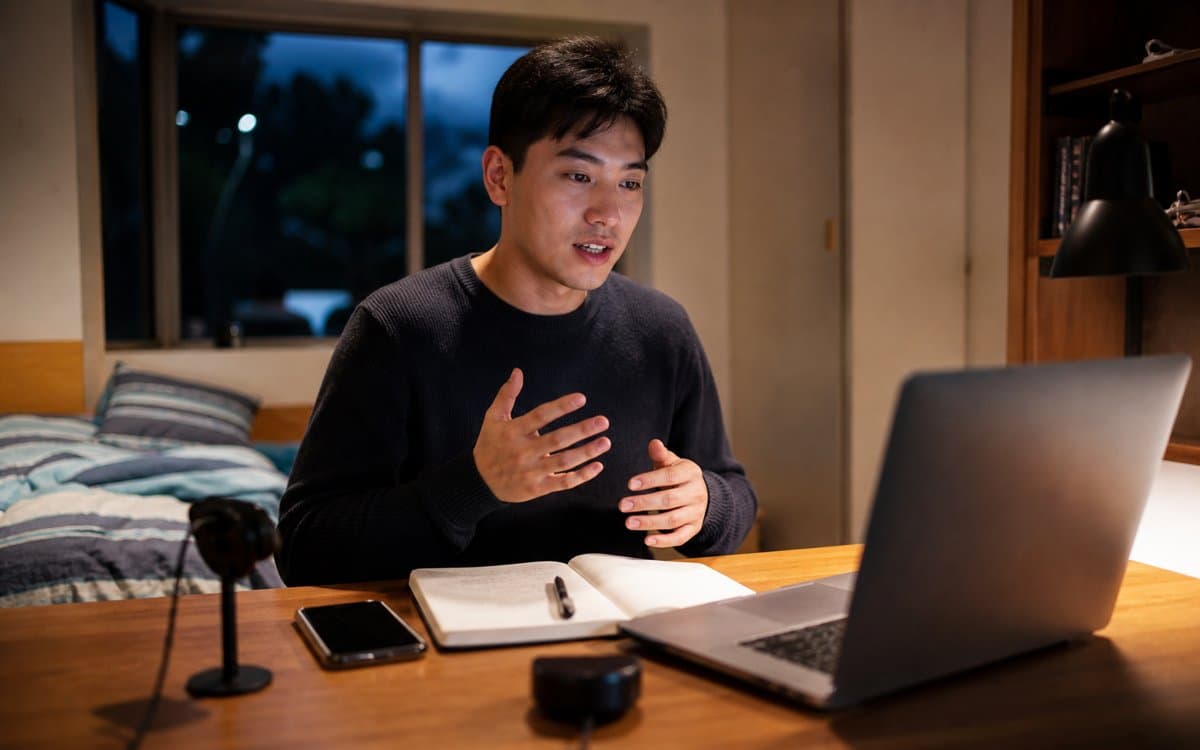
Picture a candidate freezing up in a mock interview when the interviewer asks about a technology listed on their resume. They've put "JSON" on there but can't explain what it actually does. The silence stretches for what feels like minutes before they finally admit they weren't prepared for that question.
Here's what nobody tells you about interview preparation in 2024: the old method of practicing in your bathroom mirror doesn't work anymore. Australian employers are asking deeper behavioral questions, technical scenarios change rapidly, and as an immigrant, you're already fighting an uphill battle with accent concerns and cultural context.
But AI interview preparation has completely changed the game. Not just for rehearsing answers, but for understanding the psychology behind Australian interview patterns, practicing with realistic scenarios, and getting feedback that actually makes you better.
When I came to Australia on a visa, I bombed my first three interviews. Not because I wasn't qualified—because I didn't understand what they were really asking for. The fourth interview, I'd spent two weeks using AI to practice every possible scenario. I got the job.
Why Traditional AI Interview Preparation Falls Short for Immigrants
Most immigrants approach AI interview preparation the wrong way. They ask ChatGPT to generate generic behavioral questions and practice scripted answers. That's not preparation—that's memorization. And Australian interviewers spot memorized answers from across the room.
The real challenge isn't knowing what to say. It's understanding what they're actually asking for when they say "Tell me about a time you showed leadership." Are they looking for authority? Influence? Team coordination? Problem-solving? The answer depends on Australian workplace culture, the company size, and the specific role.
Laura, one of our students, proceeded through the program with diligence, participating in the elevator pitch challenge and consistently sending across her pitch throughout the preparation period. She signed a six-figure Business Analyst offer with a leading Australian company barely three months after interview prep started.
By contrast, consider a candidate who spends weeks practising the STAR method with AI and can deliver perfectly structured answers, but keeps getting rejected after first-round interviews because every example comes from overseas and references cultural contexts Australian interviewers can't relate to. The fix is not more scripting. It is using AI to translate those experiences into Australian workplace language. Same achievements, different framing.
The key insight: AI interview preparation isn't about generating perfect answers—it's about understanding the cultural translation layer between your experience and what Australian employers value.
The SyncSkills AI Interview Preparation Framework
Here's the system we've developed after running hundreds of mock interview sessions with immigrants:
Phase 1: Context Mapping with AI
Start by feeding your resume and the job description into AI, but don't ask for interview questions yet. Ask it to identify the gap between what you've done and what they're looking for. Specifically:
- "What aspects of my experience might be unclear to an Australian employer?"
- "Which cultural references in my background need translation?"
- "What Australian workplace values does this job description emphasize?"
This gives you the foundation for everything else. You can't practice effectively until you understand the translation layer.
Phase 2: Scenario Generation
Now use AI to generate interview scenarios, but make them hyper-specific to your situation. Instead of "Tell me about a time you faced a challenge," ask for:
- "Generate behavioral questions specific to someone transitioning from [your country] to Australian project management roles"
- "What technical questions would a Melbourne fintech startup ask someone with my background?"
- "Create scenarios that test cultural fit for Australian workplace collaboration"
The quality of your practice depends entirely on the quality of your scenarios. Generic preparation produces generic results.
Phase 3: Real-Time Practice and Feedback
This is where most people stop, but it's actually where the real work begins. Use AI as your interview partner, but with specific constraints:
- Set a timer for each response (60-90 seconds max)
- Ask for feedback on clarity, not just content
- Practice explaining technical concepts to non-technical audiences
- Work on transitions between questions without losing momentum
During our mock interview sessions, I've noticed that students who practice with AI first perform significantly better under pressure. They've already worked through the awkward pauses, the cultural context issues, and the tendency to over-explain.
If you're serious about developing these skills systematically, our AI Skills That Actually Get You Hired in Australia guide covers the technical foundation you need.
Advanced AI Interview Preparation Techniques That Actually Work
The basic approach gets you started, but here's where immigrant professionals separate themselves from the competition:
The Cultural Bridge Method
Use AI to help you build bridges between your international experience and Australian workplace expectations. For every major achievement on your resume, create three versions:
- The direct version: What actually happened
- The translated version: Same facts, Australian workplace language
- The value-focused version: Emphasis on business impact and team dynamics
Amarachi, one of our graduates, had studied IT but, like so many immigrants, found herself unable to work in her field in Australia before landing a six-figure Business Analyst role in Melbourne. To see the method in action, imagine someone who led a 50-person team overseas. Instead of talking about "managing staff," they could reposition it as "coordinating cross-functional delivery in a high-growth environment with limited resources." Same experience, completely different reception.
The Technical Depth Strategy
Australian employers love to test technical knowledge, even for non-technical roles. They want to know you actually understand what you've put on your resume. Use AI to prepare for this by:
- Explaining every technology, methodology, or tool on your resume in simple terms
- Practicing analogies that make complex concepts accessible
- Preparing for "explain this to a 5-year-old" scenarios
Think back to the candidate from the opening who froze on JSON. If they spent two weeks using AI to break down every technical term on their resume, they could answer that same question by explaining JSON as "a way for different computer systems to share information, like a common language for data exchange." That is the kind of clear, confident answer interviewers remember.
The Objection Handling Framework
Let's be honest about what you're really facing. Australian employers have unconscious biases about international candidates. They worry about:
- Communication clarity
- Cultural fit
- Visa restrictions
- Technical knowledge verification
- Team integration
Use AI interview preparation to practice addressing these concerns directly, before they become problems. Don't wait for them to ask about your visa status—bring it up when explaining why you chose Australia. Don't let them wonder about your communication skills—demonstrate clarity from the first question.
For those looking to expand their opportunities, exploring AI Career Opportunities Australia 2026 can help you understand which roles are growing and what skills they actually require.
Real Interview Scenarios: AI Preparation vs. Traditional Methods
Let me show you the difference between effective AI interview preparation and what most people do:
Traditional approach: "ChatGPT, give me 10 behavioral interview questions."
SyncSkills approach: "I'm a Nigerian data analyst with 5 years experience applying for a senior analyst role at a Melbourne consulting firm. The job emphasizes client communication and cross-functional collaboration. Generate behavioral questions that would test my ability to bridge technical analysis with business strategy, specifically considering the cultural context of working with Australian senior executives."
See the difference? The second approach gives you scenarios you'll actually face, with the cultural and professional context that matters.
During our sessions, we run students through what we call "pressure scenarios"—interviews where the AI interviewer pushes back on answers, asks follow-up questions, and creates the kind of stress you'll face in real interviews. Students who only practice with simple Q&A format struggle when facing this kind of dynamic questioning.
The Follow-Up Question Challenge
Want to practise with real interview scenarios?
Our AI Interview Mastery course uses realistic simulations to build your confidence.
Explore Interview MasteryHere's something nobody talks about: Australian interviewers love follow-up questions. They'll ask you about a project, then dig deeper into your specific role, then ask about challenges, then ask about lessons learned. Each question builds on the previous one.
Traditional preparation falls apart here because you've only prepared for the initial question. AI interview preparation lets you practice entire conversation threads, not just individual responses.
Emem, one of our graduates, moved to Australia from Nigeria and was unemployed for three months despite her qualifications. Through SyncSkills she learned Business Analysis, Agile methodologies and how to position herself as a PM/Scrum Master, and within 3 months she landed a $152K PM/Scrum Master role at Westpac.
Now consider a candidate who has prepared perfect STAR responses for all the common behavioural questions. When the interviewer asks three follow-up questions about their project management example, they can't maintain consistency. The story starts falling apart because they haven't thought through the deeper layers.
The fix is using AI to simulate these conversation threads. A candidate who talks about leading a software implementation can then be ready for questions about stakeholder management, technical challenges, budget constraints, and lessons learned, because they've practised the entire conversation, not just the opening answer.
Making AI Interview Preparation Work for Your Specific Situation
The biggest mistake I see immigrants make is using generic AI interview preparation approaches. Your situation is unique, and your preparation needs to reflect that.
If you're on a student visa, you need to practice explaining your study choices and career goals in a way that shows genuine intent without revealing immigration strategies. If you're on a partner visa, you need to demonstrate commitment to the Australian market. If you're a skilled migrant, you need to show how your international experience adds value rather than creates complications.
Use AI to practice these nuanced conversations. Don't just ask for interview questions—ask for scenarios that reflect your specific visa situation, career stage, and industry context.
The key is making your international background an asset, not an explanation you need to overcome. When I interview candidates now, the ones who stand out are those who can articulate exactly why their international experience makes them more valuable, not just why they want to work in Australia.
For those starting their AI journey, our No Code AI Tools For Beginners provides a practical foundation for using these technologies effectively.
The Integration Testing Method
Here's an advanced technique: use AI to simulate the entire interview experience, not just individual questions. Create scenarios that test:
- Your ability to transition between topics smoothly
- How you handle unexpected questions about your background
- Whether you can maintain energy and enthusiasm throughout
- Your capacity to ask intelligent questions about the company
Most people practice answers in isolation. But interviews are conversations, and conversations have flow, rhythm, and momentum. AI interview preparation should reflect that reality.
Beyond the Interview: Building Long-Term Career Advantages
The skills you develop through AI interview preparation extend far beyond getting your next job. You're learning to articulate value, translate cultural context, and communicate complex ideas clearly. These are the foundational skills that separate immigrants who struggle from those who thrive in Australian careers.
When you can explain your technical expertise to non-technical audiences, you become valuable for client-facing roles. When you can bridge international and local perspectives, you become valuable for global companies. When you can adapt your communication style for different contexts, you become leadership material.
The interview is just the first test. But master AI interview preparation properly, and you're building capabilities that will serve you throughout your Australian career.
Looking ahead, consider exploring AI Side Hustle Ideas Australia to complement your career growth with additional income streams that leverage these same communication and technical skills.
---
You might also like
## How to Use AI Interview Preparation for Australian Technical Roles Specifically
Generic AI interview practice will not get you a $100K+ tech role in Sydney or Melbourne. The difference between candidates who land senior developer roles at companies like Atlassian, Canva, or the major four banks and those who keep getting rejected at the final round is specificity in their preparation.
Here is what I mean by specificity. Australian tech employers, particularly those hiring on employer-sponsored visas like the TSS 482 or the Skills in Demand visa, are screening for two things simultaneously: your technical competence and your ability to work within Australian team culture. AI tools let you practice both at once when you use them correctly.
Start by feeding your target job description directly into your AI tool of choice. Do not just paste the title. Paste the entire description, including the line items about "collaborative environment" and "stakeholder communication," because those phrases are code for behavioral interview questions you will absolutely face. Ask the AI to generate role-specific questions based on that exact language, then ask it to evaluate your answers against the STAR format that Australian hiring managers at ANZ, Telstra, and most government tech contractors explicitly train their panels to look for.
Our graduates who secured roles averaging $118,000 in their first Australian tech position spent a minimum of 15 hours on AI-assisted interview preparation, not 2 or 3 hours. That is not a motivational number. That is the actual pattern we observed across 250+ placement outcomes. The candidates who treated AI practice as a one-session activity got offers in the $75,000 to $85,000 range when they got them at all.
For accent and fluency concerns specifically, use AI voice tools like Speeko or even the voice input function in ChatGPT to record yourself answering questions and then read back the transcript. When your spoken answer and the transcript diverge significantly, that is where interviewers are losing comprehension. Fix those gaps before you walk into a room.
What AI Interview Preparation Cannot Replace (And How to Fill the Gap)
Every week someone asks me whether AI practice alone is enough to land a tech role in Australia. The honest answer is no, and you deserve to know exactly why before you invest your time.
AI tools are exceptional at drilling question formats, expanding your vocabulary for Australian workplace scenarios, and giving you instant feedback on structure. Where they fall short is in simulating the actual power dynamics of an Australian interview panel. When a hiring manager at a mid-sized fintech in Melbourne pauses after your answer and says nothing for four seconds, that silence is a test. AI cannot replicate the psychological pressure of that moment, and most immigrants from high-context cultures find it genuinely destabilizing the first time it happens.
The solution is combining AI preparation with live human practice. This is not optional if you are targeting roles above $100,000. Use AI to build your answer bank and refine your structure, then test those answers with a real person who understands Australian interview conventions before your actual interview.
This is precisely the gap that the SyncSkills mock interview coaching program addresses alongside your technical training. If you want to understand how the broader job search strategy for immigrants in Australia connects to your interview preparation, that context matters because interview success without a targeted application strategy means you are practicing for opportunities you are not actually creating.
The candidates who combine structured AI preparation with culturally-informed human feedback are the ones reaching the $120,000 to $150,000 salary band within 18 months of landing in Australia. That outcome requires both tools working together, not one or the other.
Frequently Asked Questions
How long should I spend on AI interview preparation before applying for jobs?
Don't wait until you feel perfectly prepared—you never will. Spend 2-3 weeks building your foundation with AI practice, then start applying while continuing to refine your skills. Real interviews are the best practice, and waiting for perfection means missing opportunities. As I tell our students, "Treat it like a game right now. You have nothing to lose."
Which AI tools are best for interview preparation specifically?
Start with ChatGPT or Claude for scenario generation and practice conversations. Use them to simulate different interviewer personalities—the technical expert who wants details, the HR manager who focuses on cultural fit, the senior executive who asks strategic questions. The tool matters less than how systematically you use it to address your specific challenges.
How do I practice explaining my visa situation without making it awkward?
Use AI to role-play different ways to bring up your visa status naturally. Practice phrases like "I'm excited to contribute to Australia's tech sector through my permanent residency pathway" or "My visa allows me to commit fully to this role and grow with the company." Make it about what you can offer, not what restrictions you face.
Should I mention that I used AI to prepare for the interview?
Never mention AI preparation directly, but don't hide the systematic thinking it helped you develop. If asked about your preparation approach, focus on how you researched the company, analyzed the role requirements, and thought through relevant examples from your experience. The preparation shows professionalism—the specific tools are irrelevant.
How do I know if my AI interview preparation is actually working?
Track specific metrics: Are you getting past phone screens more often? Are you receiving feedback about clear communication? Are interviewers asking follow-up questions that show genuine interest rather than basic qualification checking? If you're still getting generic rejection emails, your preparation needs to be more targeted to address specific concerns Australian employers have about international candidates.
Ready to transform your interview performance and land the role you deserve? Our comprehensive career acceleration program helps immigrants master not just AI interview preparation, but the entire job search process in Australia. Start your journey with SyncSkills today and join hundreds of successful professionals who've made Australia home.