# AI Skills That Actually Get You Hired in Australia (Not Just Hype)
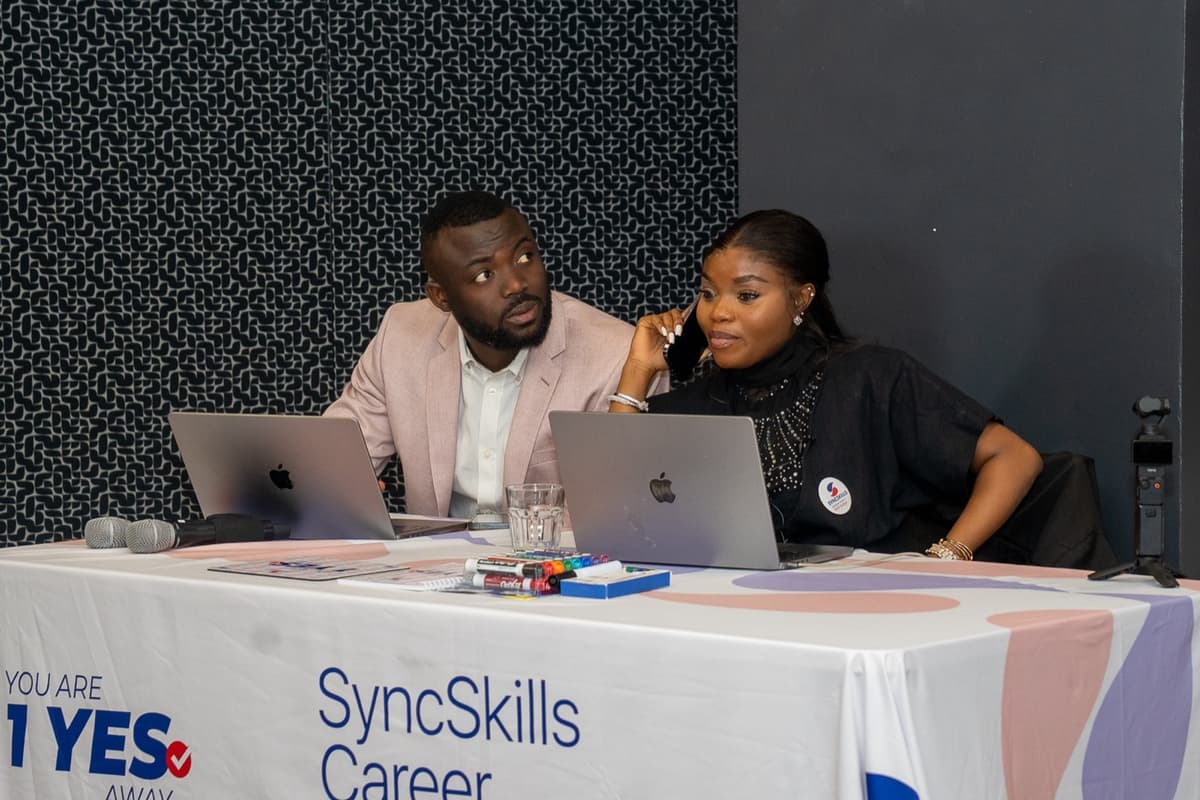
During one of our AI masterclass sessions, I asked the room a simple question: what does 10 times 20 times 40 times 3 times 1 times 35 equal? No calculator. Sixty seconds.
The room went quiet. People fumbled with mental maths. A few guessed wildly.
Then I pulled up ChatGPT and got the answer in two seconds.
That exercise wasn't about maths. It was about demonstrating a point I make in every session: AI is not going to replace your thinking. But someone who knows how to use AI as a collaborator will outperform someone who doesn't. Every single time.
If you're searching for which AI skills actually get you hired in Australia, stop scrolling through certification lists. The people landing $120,000 to $160,000 roles right now aren't the ones with the most credentials. They're the ones who can walk into a room and solve problems faster because they know how to work with AI.
Let me break down what matters and what's noise.
The AI Skills Gap in Australia Is Where the Money Is
Here's what most people miss. Australia doesn't have a shortage of people who've heard of ChatGPT. It has a shortage of people who can use AI to create measurable business value.
The Tech Council of Australia has been warning about the growing gap between the digital workforce we need and the one we have. Jobs and Skills Australia consistently lists tech and digital roles on priority occupation lists. The demand is screaming.
But the supply of professionals who can actually apply AI in a business context? Thin.
I've watched this play out with our own students. People come in working disability support shifts, aged care, hospitality, sometimes three jobs at once. They learn to position their existing skills alongside AI capability. And within three to six months, they're fielding offers from major organisations, banks, government departments, and insurance firms.
The common thread? Not a single one had a computer science degree. Not one needed to write code. What they had was the ability to use AI to make a team faster, smarter, and more productive.
That combination is what the Australian market is paying premium salaries for right now.
Prompt Engineering: The Skill That Unlocks Everything Else
I spend an entire day of our five-day AI masterclass on prompt engineering alone. Not because it's complicated. Because if you miss this skill, nothing else works.
Here's how I put it to our students: if you miss the skill of prompting, you're not going to get the best out of AI and everything is going to be generic and you're not going to be happy with the response.
Prompt engineering is how you communicate with AI to get useful output. Most people type something vague like "write me a business plan" and get back generic slop. Then they conclude AI isn't useful.
That's like blaming a car for not taking you somewhere when you never entered the destination.
The three layers of prompting that matter:
Master prompts define who you are, your context, your industry, your standards. Set these up once and they shape every interaction with your AI tools.
System prompts define how the AI should behave for a specific task. Its role, constraints, output format, tone.
User prompts are your actual instructions for each task.
When you layer these properly, AI goes from being a generic chatbot to a personalised assistant that understands your work. During our masterclass, I had students create their own master prompts. The transformation was immediate. Same tool. Same AI model. Completely different quality of output.
Prompt engineering is already a standalone role at some organisations. But even if you never hold that title, this skill makes everything else you do with AI dramatically better. A business analyst who can prompt AI to draft stakeholder requirements in 10 minutes instead of spending 2 hours writing from scratch is worth more. A project manager who uses AI to generate risk assessments and status reports on the fly is worth more.
The skill isn't the AI. It's knowing how to direct it.
The 5 AI Skills Australian Employers Are Paying For Right Now
Forget buzzword bingo. Here are the capabilities that are translating into real job offers and real salary increases across Australia.
1. AI-Augmented Business Analysis
This is the skill combination I'm most bullish on, and the one I've seen produce the most dramatic career results.
Business analysts who can use AI to accelerate requirements gathering, stakeholder analysis, process mapping, and documentation are commanding salaries between $120,000 and $160,000. They're not AI engineers. They're business professionals who use AI to work faster and deliver better output.
The practical application: you're in a stakeholder meeting, people are discussing complex requirements, and instead of spending three days afterwards writing the business requirements document, you feed your meeting notes into AI, structure the output with the right prompt, and have a polished first draft in an hour. You spend the remaining time doing what AI can't -- building relationships, navigating organisational politics, understanding nuances that only come from human conversation.
We've helped over 250 people transition into these kinds of roles. The results speak for themselves: $30.3 million in combined salaries generated for our students, with an average placement of $120,000.
2. AI Content and Marketing Production
Every business in Australia needs content. Blog posts, social media, email campaigns, video scripts, ad copy. The businesses growing fastest right now are producing volume without sacrificing quality, and they're doing it with AI.
I demonstrated this live during one of our sessions. I gave AI a basic prompt and a photo, and it produced professional marketing material almost instantly. But here's the key insight: AI doesn't replace the strategist. It replaces the manual labour of execution. You still need someone who understands the audience, the brand, the objective. AI handles the production.
After training your workflow properly, your AI can write exactly like you. You get start-to-finish blueprints for creating viral reels, shorts, full YouTube videos, ad copy, and email campaigns. The person directing all of this doesn't need a marketing degree. They need prompt engineering skills and business sense.
If you can position yourself as someone who understands marketing strategy AND can use AI to execute at speed, you're worth more than a traditional marketing hire.
3. Automation and Workflow Design
This is where serious money enters the picture.
During our masterclass, I showed attendees an automation I built with AI assistance. A workflow that would have taken a developer days to debug, AI helped me resolve in minutes. The room went quiet.
Automation as a business model is worth more than $300 billion globally, projected to grow significantly before 2030. That's not hype. That's the market valuation of making businesses more efficient.
But here's what I always tell people: if all you know how to do is sell templates, you're cooked. Because AI can generate those templates now. What businesses actually need is someone who can solve business problems. Someone who understands the pain point, designs the solution, and implements it.
Platforms like Make, Zapier, and n8n don't require traditional coding. What they require is systems thinking, business process understanding, and the ability to design solutions. Add AI to that mix, and you're solving problems companies will gladly pay to have fixed.
4. AI Image, Video, and Creative Production
This one surprises people, but it shouldn't.
We dedicated an entire day of our masterclass to creating images, videos, and hyper-realistic content using AI tools. The capabilities have moved from novelty to commercial viability faster than most people expected.
For example, imagine an employee who notices that a seasonal banner their company designed looks dated and unprofessional. Using AI design tools, they could rebuild it quickly and share the new version with their manager. That kind of initiative tends to get noticed, and it can open up conversations with teams like marketing.
The point is not to wait for permission. Spot an opportunity and act. That combination of initiative plus AI capability is exactly what gets people hired.
Models like DALL-E, Midjourney, VO2, and Kling are producing outputs that businesses use in real campaigns. VO2 produces the best natural-looking video outputs, though it's on the expensive side. The skill isn't generating random AI art. It's understanding brand guidelines, marketing objectives, and visual storytelling, then using AI as the production engine.
5. AI-Powered Research and Data Analysis
Learn to use AI tools to accelerate your career
Our courses teach practical AI skills that give you an edge in the Australian job market.
Explore AI CoursesEvery role that involves research or analysis is being transformed. Policy analysts, market researchers, consultants, project managers, business analysts.
Tools like Perplexity for research, Claude for analysis, and ChatGPT for summarisation can compress hours of work into minutes. But the skill isn't using the tool. It's knowing what questions to ask, how to validate the output, and how to present findings in a way that drives decisions.
I showed students how to use AI to analyse competitor landscapes, summarise regulatory documents, generate market research briefs, and identify data trends, all without needing advanced Excel or SQL skills. The BA who walks into a meeting with AI-generated insights from a dataset the team hasn't had time to analyse gets noticed fast.
The AI Skill That Separates the Top 1%
Here's what I've observed across thousands of hours of teaching and coaching: the people who get the most out of AI aren't the most technical. They're the ones who understand value creation.
I say this constantly: the closer your skills are to creating value, the more money you create. AI is a tool. A powerful one. But it's still a tool.
The people earning $150,000 or more aren't impressive because they know how ChatGPT works. They're impressive because they can walk into a business, identify a problem worth solving, and use AI to solve it faster and better than anyone else.
That's the difference between being an AI consumer and an AI producer. Consumers use ChatGPT to write emails that sound like a robot. Producers use AI to build systems that generate revenue, reduce costs, and save time.
During every masterclass I ask the room: are you going to be a consumer or producer in the AI era?
The producer always wins.
The Myth of AI Certifications
I hear this question constantly: "Should I get an AI certification?"
Here's my honest answer: a certification without practical ability is a piece of paper.
I've seen people with multiple certifications who can't build a basic automation workflow. I've seen people with zero certifications land $140,000 roles because they could demonstrate real AI capability through a portfolio of actual work.
Universities are struggling to teach AI effectively. Fixed curriculum doesn't work for technology that evolves weekly. By the time a university designs an AI course, delivers it over a semester, and graduates students, the tools have changed three times.
What gets you hired is the ability to solve problems using AI, demonstrated through real projects and real results. Not certificates.
Build an AI Portfolio Instead
- Before/after comparisons: Show a task done traditionally versus with AI assistance
- Automation workflows: Document processes you've improved using AI tools
- AI-assisted deliverables: Requirements documents, presentations, research briefs you created with AI help
- Time savings data: Quantify exactly how much time your AI approach saved
In an interview, saying "I used AI to reduce our documentation time from 8 hours to 2 hours per sprint" beats any certification you could list on a resume.
How to Build Employable AI Skills in 90 Days
Don't overcomplicate this. Here's the practical path.
Days 1 to 30: Build your foundation. Learn ChatGPT, Claude, and Perplexity. Don't bounce between twenty tools. Master these three and understand when to use each. Practice prompt engineering every single day by taking tasks from your current work and accomplishing them with AI. Keep a log of what works and what doesn't.
Days 31 to 60: Build proof. Complete a real project using AI. At your current job, for a friend's business, for a volunteer organisation. Create before-and-after documentation. Collect screenshots, time savings data, and outcomes.
Days 61 to 90: Position yourself. Update your LinkedIn to specifically mention AI tools you use and outcomes you've delivered. Start posting about your AI experiments. Apply for roles that mention AI, automation, digital transformation, or innovation.
The people who follow this path don't just learn AI. They become the person in the room everyone turns to when AI questions come up. That's how careers accelerate.
AI Skills for Specific Australian Roles
Business Analysts: Draft requirements from stakeholder notes, create process maps from descriptions, analyse data without advanced technical skills, generate test scenarios and acceptance criteria.
Project Managers: Create project plans and timelines, generate risk registers, draft status reports, analyse project data for early warning signs, automate meeting minutes and action tracking.
Scrum Masters: Prepare sprint retrospective formats, analyse team velocity patterns, create coaching materials, build knowledge bases from documentation.
Change Managers: Develop impact assessments, create communication plans, analyse stakeholder sentiment, build training materials and FAQ documents.
---
You might also like
- AI Side Hustle Ideas in Australia: Build Income While You Work
- Prompt Engineering Career
- Ai Consulting Business Australia
Frequently Asked Questions
What AI skills are most in demand in Australia right now?
Prompt engineering, AI-augmented business analysis, workflow automation, AI content production, and AI-powered data analysis. Roles that combine traditional business skills with AI capability are commanding salaries between $120,000 and $160,000 across major Australian organisations.
Can I learn AI skills without a technical background?
Absolutely. Modern AI tools are designed for non-technical users. If you can write a clear instruction and think logically about problems, you can use AI effectively. Our AI masterclass takes people from complete beginners to confidently using AI for business in five days. Zero coding required.
How long does it take to build employable AI skills?
With focused daily practice, you can build a strong foundation in 30 days and be job-ready in 90 days. The key is applying AI to real business problems, not just watching tutorials. We've seen students land new roles within three to six months of starting their AI skills journey.
Will AI skills become less valuable as AI gets smarter?
The tools will change, but the ability to apply AI to business problems will become more valuable, not less. As AI becomes more capable, the gap between people who can harness it and people who can't will widen. Early adopters will have experience and intuition that newcomers can't replicate.
Is prompt engineering a real career path?
Yes. It's both a standalone role at some organisations and a skill that enhances every other professional role. Professionals who can write effective prompts are outperforming their peers across every industry, from marketing to finance to project management.
Stop Studying AI. Start Using It.
The gap between people who know about AI and people who use AI to create value is where the money lives.
I've had over 2,000 hours of conversations with people about their careers. The pattern I see most often is waiting. Waiting for the perfect time. Waiting for someone to say it's safe. Waiting to see someone else succeed first.
Action compounds. Inaction compounds too.
The AI skills window in Australia is wide open right now. Most professionals haven't caught up. That gap is your competitive advantage, but it's closing.
If you want to build AI skills that translate directly into career results, join our next free masterclass where we cover prompt engineering, automation, content creation, and the exact strategies working right now for people in Australia. No theory. No fluff. Five days of practical skill-building that you can apply immediately.
The question isn't whether AI will reshape careers in Australia. It already has. The question is whether you'll be ready when the next opportunity shows up.