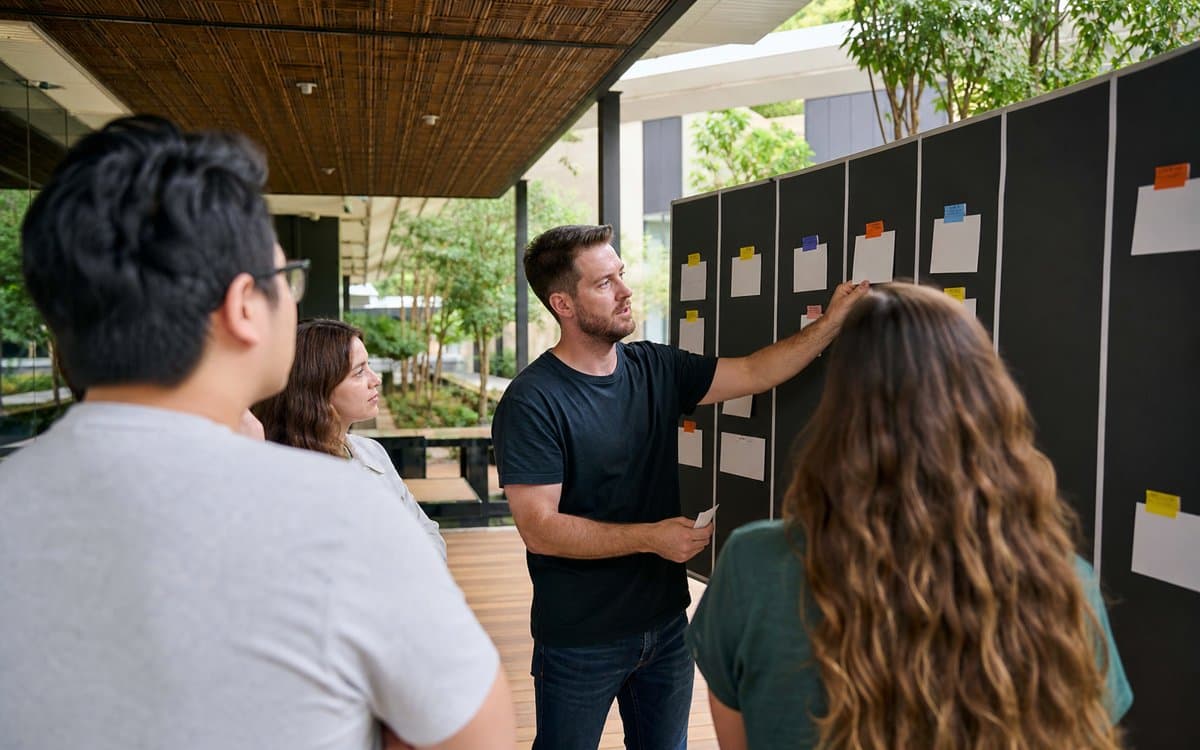
Picture a Scrum Master three months into their first Scrum Master role. Their manager asks them to step up as an Agile Coach. The pay rise is significant, but they're terrified they're not ready.
Here's what I'd tell them, and what nobody tells you about the agile coach career path: it's not about having all the answers. It's about knowing how to help teams find their own.
When I started working with Australian tech companies, I noticed something fascinating. Most Scrum Masters hit a ceiling around $110-120K, then wonder why they're stuck. Meanwhile, Agile Coaches in the same companies were pulling $150-180K, sometimes more. The difference wasn't years of experience or fancy certifications.
The difference was scope.
Understanding the Agile Coach Career Path in Australia
Let me be straight with you — the agile coach career path isn't a straight line from Scrum Master to Agile Coach. It's more like climbing a mountain with multiple routes to the summit.
Most people think it goes like this: Developer → Scrum Master → Agile Coach. Wrong.
The real progression looks more like this:
Traditional Path: - Scrum Master (2-3 years) → Senior Scrum Master → Team-level Agile Coach → Enterprise Agile Coach
Accelerated Path: - Business Analyst/Project Manager → Scrum Master → Agile Coach (18-24 months)
Alternative Path: - Any role with people/process focus → Direct entry into Agile Coaching (with proper training)
Take Emem, one of our graduates. She moved to Australia from Nigeria and was unemployed for three months, unable to break into the Australian job market despite her qualifications. Within 3 months of joining SyncSkills, she landed a PM/Scrum Master role at Westpac on $152K.
She learned Business Analysis and Agile methodologies, and how to position herself as a PM/Scrum Master with the real-world skills employers wanted. That kind of Scrum Master role is a common first step on the path to coaching.
The Reality Gap: What Scrum Masters Miss About Coaching
Most Scrum Masters think they're already coaching. They're not.
When you're a Scrum Master, you're focused on one team, one product, one set of ceremonies. You're essentially a process facilitator with some coaching elements. Nothing wrong with that — it's a solid scrum master career path in Australia that pays well.
But Agile Coaches? They're working across multiple teams, multiple products, sometimes multiple business units. They're not just running retrospectives — they're diagnosing why retrospectives keep producing the same issues across different teams.
Here's the shift that changes everything:
Scrum Master thinking: "How do I make this sprint successful?" Agile Coach thinking: "What organizational patterns are preventing multiple teams from being successful?"
For many Scrum Masters, the breakthrough comes when they stop trying to solve their team's problems and start helping the team solve its own. That's often when a manager notices their potential for a coaching role.
The technical skills overlap significantly with what you'd learn in any scrum master training program, but the mindset shift is everything.
Building Your Agile Coach Career Path: The Skills That Actually Matter
Forget what the job descriptions say about "10+ years experience" and "multiple certifications." Australian companies are desperately short of good Agile Coaches, and they're willing to hire based on capability, not just credentials.
Here are the skills that actually get you hired:
Systems Thinking Over Process Knowledge
Anyone can memorize the Scrum Guide. Not everyone can see how team dysfunctions connect to organizational structure problems.
When I work with students, I teach them to ask questions like: - "What would need to be true for this team to succeed without your help?" - "If this problem exists across multiple teams, what's the common factor?" - "What would happen if we removed this process entirely?"
Facilitation Over Presentation
Agile Coaches don't give training presentations. They facilitate discoveries.
The difference? In a presentation, you have the answers. In facilitation, you help the room find the answers together. This skill alone separates good coaches from great ones.
Organizational Psychology Over Agile Frameworks
Here's something controversial: most "Agile transformations" fail not because of poor framework implementation, but because of unchanged organizational behavior.
The best Agile Coaches I know understand power dynamics, change psychology, and culture more than they understand SAFe or LeSS frameworks.
Business Acumen Over Technical Knowledge
You need to understand how agile practices connect to business outcomes. When a VP asks why the agile transformation is worth $2M in consulting fees, you better have an answer that makes financial sense.
This is where many technical people struggle. They can explain velocity and burn-down charts but can't connect sprint performance to quarterly revenue targets.
Navigating the Australian Market: Salary and Demand Reality
Let's talk numbers because that's what matters for your mortgage and visa applications.
Over 250 immigrants have made career transitions with SyncSkills
See how others turned their overseas experience into Australian careers.
Read Success StoriesCurrent Australian Market (2024-2025): - Agile Coach: $130K - $180K (permanent roles) - Senior Agile Coach: $160K - $220K - Enterprise/Principal Agile Coach: $200K - $280K - Contract Agile Coach: $1,000 - $1,800 per day
Compare that to scrum master salaries in Australia, which typically cap around $120-140K for senior roles, and you see why this progression makes financial sense.
But here's what job boards won't tell you: most Agile Coach positions are never advertised. They're filled through internal promotions or referrals.
Why? Because hiring managers know that agile coaching success depends more on cultural fit and communication ability than resume checkboxes. They'd rather promote a known Scrum Master or bring in someone through their network.
This is actually good news for immigrants and career changers. Traditional recruitment advantages (local networks, familiar qualifications) matter less in agile coaching than in other tech roles.
The demand is intense. I get calls from recruiters weekly asking if I know any good Agile Coaches. Not "certified" coaches — good coaches. Companies have learned that certifications don't predict coaching effectiveness.
Breaking Into Agile Coaching: The Practical Pathway
Here's how you actually make this transition, whether you're coming from Scrum Master or another role entirely.
Phase 1: Develop the Foundation (2-3 months)
Start coaching before you have the title. If you're a Scrum Master, begin facilitating cross-team retrospectives. If you're in another role, volunteer to help with process improvement initiatives.
The goal isn't to become an expert immediately. It's to develop your coaching voice and start getting comfortable with not having all the answers.
Phase 2: Gain Visibility (3-6 months)
Document your coaching interventions and their outcomes. Not in a formal report — in simple before/after stories.
"Team X was struggling with story estimation. Instead of teaching them planning poker, I facilitated a session where they discovered their estimates were inconsistent because they weren't aligning on 'done' criteria. They solved their own problem."
This type of storytelling demonstrates coaching mindset better than any certification.
Phase 3: Position for Opportunities (6-12 months)
Most Agile Coach roles are created, not posted. Companies realize they need coaching help and look for someone internal to step up, or they create a new position for someone who's already demonstrating coaching capability.
If you understand the difference between scrum master vs product owner roles and can help teams navigate those boundaries, you're already thinking at a coach level.
The Immigrant Advantage
Having an outside perspective is actually an advantage in agile coaching. You see organizational patterns that locals might miss because they're too familiar with "how things are done here."
When I first started coaching Australian teams, my questions seemed obvious to me but revelatory to them. "Why do you have a two-hour planning meeting followed by another hour of 'clarification'?" Sometimes fresh eyes spot what experienced eyes overlook.
---
You might also like
Frequently Asked Questions
Do I need specific certifications to become an Agile Coach in Australia?
No. While certifications like ICF coaching credentials or advanced Scrum certifications can help, Australian companies care more about demonstrated coaching ability than credentials. Focus on building a portfolio of coaching interventions and outcomes rather than collecting certificates.
How long does it typically take to transition from Scrum Master to Agile Coach?
With focused effort, 12-18 months is realistic. Someone who is extremely proactive about seeking coaching opportunities beyond their assigned team may move faster. The key is starting to coach before you have the official title.
What's the biggest mistake people make when trying to become an Agile Coach?
Thinking they need to be the expert with all the answers. Great coaches ask great questions and facilitate team discoveries. If you're always providing solutions instead of helping teams find their own, you're still in a Scrum Master mindset.
Can I become an Agile Coach without being a Scrum Master first?
Absolutely. Some of the best Agile Coaches I know came from business analysis, project management, or even non-tech backgrounds. The core skills — facilitation, systems thinking, and organizational psychology — can be developed in many different roles.
Is the Australian market really short of Agile Coaches?
Yes, dramatically so. The demand far exceeds supply, especially for coaches who understand both agile practices and business context. This shortage is one reason why companies are willing to develop internal candidates rather than wait for "perfect" external hires.
The agile coach career path isn't about climbing a corporate ladder — it's about expanding your impact from one team to entire organizations. If you're ready to make that transition, or you're considering whether agile coaching aligns with your career goals, we can help you build the foundation systematically.
At SyncSkills, we've helped dozens of professionals make this exact transition, including immigrants who started with no local experience and now coach at major Australian companies.
Ready to explore your agile coaching potential? Start your journey with SyncSkills and discover how to position yourself for six-figure coaching opportunities in the Australian market.