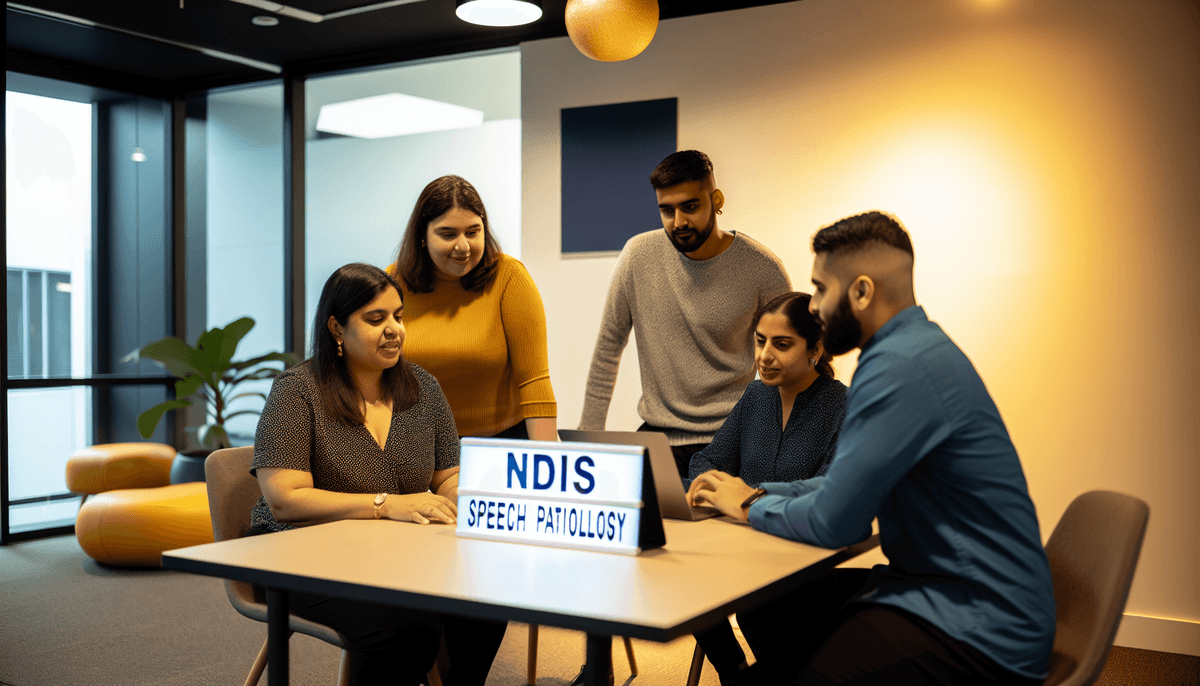
Picture a conversation you might hear at a networking event in Sydney: "I'm earning a good salary as a speech pathologist, but I'm burnt out. There's got to be a better way." Imagine the speaker is an immigrant who has been grinding in the public health system for five years. What she might not realise is that some allied health professionals have taken a different path by building their own NDIS speech pathology business, setting their own hours and growing on their own terms.
This isn't a fairy tale. It's the reality that thousands of allied health professionals are missing while they trade time for money in traditional employment. The NDIS represents Australia's largest disability support system, worth $46 billion annually, yet most immigrants in allied health treat it like background noise instead of the business opportunity it actually is.
When I came to Australia in 2018, I thought the path was simple: get qualified, find a job, climb the ladder. But here's what nobody tells you — the ladder only goes so high, and it's getting more crowded every year. The real wealth isn't in climbing someone else's ladder. It's in building your own.
Why Starting an NDIS Speech Pathology Business Makes Sense (Even If You're Not Australian)
Let me kill a myth right away: you don't need to be born here to succeed in the NDIS space. Some of the most successful providers I know are immigrants who brought fresh perspectives to old problems.
The NDIS launched in 2013 with a simple premise: give people with disabilities choice and control over their support. Traditional block funding was replaced with individual budgets, creating a market where quality providers could thrive regardless of their accent or background.
Here's what the numbers tell us: there are over 650,000 NDIS participants as of 2024, and that number grows by roughly 10% each year. Speech pathology is consistently one of the most in-demand services, particularly for children with autism spectrum disorders and adults with acquired brain injuries.
But demand alone doesn't create opportunity. What creates opportunity is the gap between what participants need and what's currently available. Most established providers are stuck in old models — clinical settings, rigid schedules, one-size-fits-all approaches. As an immigrant entrepreneur, you can build something different.
For example, a speech pathologist could start an NDIS practice as a mobile service instead of fighting for clinical space in expensive medical centres. A van equipped with therapy materials makes it possible to visit participants in their homes, schools and community settings. That model solves a real problem for participants: accessibility.
The regulatory environment might seem intimidating, but it's actually more straightforward than most business sectors. The NDIS Quality and Safeguards Commission provides clear guidelines, and NDIS provider registration follows a predictable process. Unlike starting a tech company where you're guessing what the market wants, NDIS businesses serve people who already have funding approved for specific services.
The key insight most people miss: This isn't just about being a speech pathologist who happens to work with NDIS participants. It's about building a business that uses speech pathology as the core service but thinks bigger about participant outcomes.
Building Your NDIS Speech Pathology Business: The Practical Framework
Starting any business is hard. Starting an NDIS speech pathology business as an immigrant adds complexity, but it also provides advantages if you play it right. Here's the framework I've seen work consistently:
Phase 1: Foundation and Registration (Months 1-3)
First, get your business structure sorted. Most successful providers start as sole traders or small companies, not complex partnerships. The Australian Business Number (ABN) is straightforward, but the NDIS provider registration requires more documentation.
You'll need professional indemnity insurance, public liability coverage, and depending on your service model, workers compensation. Don't overthink this — speak to an insurance broker who understands NDIS providers. Budget $3,000-$5,000 annually for comprehensive coverage.
The registration itself involves demonstrating you meet the NDIS Practice Standards. For speech pathology, this means showing your qualifications are recognized by Speech Pathology Australia, having appropriate clinical governance processes, and proving you understand participant rights and safety requirements.
Critical mistake to avoid: Don't wait until registration is complete to start building relationships. Use this phase to network with support coordinators, other allied health providers, and disability advocacy groups. The NDIS ecosystem runs on relationships and referrals.
Phase 2: Service Design and Market Positioning (Months 2-4)
Here's where immigrant entrepreneurs often outperform local competitors: you understand what it's like to navigate complex systems. Many NDIS participants — especially those from culturally and linguistically diverse backgrounds — feel lost in the system. Your lived experience of adapting to Australian systems becomes a business advantage.
Design your services around participant outcomes, not clinical protocols. Instead of "45-minute speech therapy sessions," think "communication goals that help participants engage more confidently in their community." The difference isn't semantic — it's fundamental to how you price, deliver, and scale your services.
Consider specialization early. General speech pathology is competitive. But speech pathology for specific populations — culturally diverse communities, people with acquired brain injuries, or participants transitioning from residential care to independent living — can command premium rates and build stronger referral networks.
For example, a speech pathologist from the Philippines might build a practice around serving Filipino families with children on the autism spectrum. That could mean conducting therapy sessions in both English and Tagalog, helping families navigate cultural expectations around disability, and becoming a go-to provider for support coordinators working with Filipino participants.
Phase 3: Operations and Growth (Months 4-12)
The operational side of an NDIS business is where many clinical professionals struggle. You're trained to provide therapy, not manage invoicing, compliance reporting, and business development. But you don't need to become an operations expert overnight.
Start with simple systems: a practice management software that handles NDIS claiming (platforms like Brevity or ShiftCare are popular), cloud-based file storage for participant records, and basic bookkeeping through Xero or MYOB.
Revenue model insight: NDIS pricing is regulated, but value isn't. Standard speech pathology rates range from $193.99 to $290.99 per hour depending on the participant's location and complexity of needs. However, innovative service delivery can increase your effective hourly rate significantly.
For example, group therapy sessions can serve multiple participants simultaneously while still providing individual outcomes. Community-based programs can combine therapy goals with social skill development. Mobile services eliminate travel time for participants, making you the preferred provider even at premium rates.
Growth happens through three channels: direct participant referrals, support coordinator recommendations, and other provider partnerships. Understanding the NDIS career ecosystem helps you identify who influences funding decisions and participant choices.
The most successful providers I know spend 20% of their time on business development — not selling, but building relationships with people who support participants in making provider choices.
Common Pitfalls and How Immigrants Can Avoid Them
Every business has predictable failure points. For NDIS speech pathology businesses, these failures cluster around three areas: compliance misunderstandings, cash flow problems, and cultural blind spots.
Compliance isn't optional, but it's not mysterious. The NDIS operates on evidence-based practice principles. Document everything — assessments, treatment plans, progress notes, and outcomes achieved. But don't get trapped in paperwork paralysis. Invest in practice management software that automates compliance reporting rather than trying to build complex manual systems.
Many immigrant professionals worry their documentation isn't "Australian enough." This is usually overthinking. Clear, professional documentation that shows participant progress and links interventions to plan goals is what matters. Your international training often provides perspectives on evidence-based practice that enhance, rather than limit, your compliance capabilities.
Cash flow kills more NDIS businesses than competition. The NDIS payment system can take 14-21 days for claims processing, longer if there are errors or disputes. Plan for this delay from day one. Many providers offer direct billing to the NDIS, which improves participant experience but requires you to carry the cash flow risk.
Over 250 immigrants have made career transitions with SyncSkills
See how others turned their overseas experience into Australian careers.
Read Success StoriesSet up a business account with at least 6-8 weeks of operating expenses before you start trading. This isn't pessimism — it's realistic planning for a predictable business cycle.
The cultural blind spot hits immigrant entrepreneurs differently than you might expect. It's not about language barriers or understanding Australian culture. It's about underestimating your cultural competency as a business advantage.
Many NDIS participants come from diverse cultural backgrounds where traditional healthcare models don't align with family expectations or communication styles. Your experience navigating between cultures, understanding extended family decision-making, and communicating across cultural contexts makes you more effective, not less.
For example, a speech pathologist who trained overseas might worry that their accent will limit their client base. In practice, participants and families often value patience with communication differences and an understanding of how cultural factors influence therapy engagement. That expertise could even become a second offering, such as cultural competency workshops for other NDIS providers.
The Business Model That Actually Works for NDIS Speech Pathology
Forget the traditional clinic model. It's expensive, inflexible, and designed for a healthcare system that no longer exists. The NDIS rewards outcomes and flexibility, not clinical real estate and rigid appointment schedules.
The hybrid service model combines in-home therapy, community-based interventions, and group programs. This approach maximizes your time utilization while providing participants with more naturalistic intervention settings.
Start with a mobile service base. Your "clinic" is wherever participants need support — their home, workplace, school, or community venue. This eliminates facility costs, reduces participant travel barriers, and allows you to charge premium rates for convenience.
Add group programs for participants with similar goals. Communication groups for people with acquired brain injuries, social skills groups for young adults with autism, or workplace communication programs for participants transitioning to employment. Groups increase your effective hourly rate while providing participants with peer learning opportunities.
Consider partnership models with other providers. NDIS plan management businesses often refer participants who need therapeutic services. Occupational therapists, physiotherapists, and support workers encounter participants who could benefit from speech pathology interventions.
Build these partnerships systematically. Most providers are too busy serving existing participants to actively network. Your proactive approach to relationship-building becomes a competitive advantage.
Technology integration separates successful providers from those who struggle. This doesn't mean expensive apps or complex systems. It means using technology to solve real problems for participants and streamline your operations.
Simple examples: video sessions for participants in remote areas, digital progress tracking that participants can share with their families, or communication apps that support therapy goals outside of sessions.
The key is solving problems that traditional service models can't address efficiently. NDIS participants often have complex needs that require coordination across multiple providers and settings. Technology helps you stay connected to participant progress between sessions and coordinate more effectively with their broader support team.
Revenue diversification protects your business from changes in NDIS policies or individual participant circumstances. Beyond direct therapy services, successful providers often generate revenue through training other providers, consulting with organizations supporting people with disabilities, or developing resources that benefit the broader community.
This isn't about diluting your focus — it's about leveraging your expertise across multiple revenue streams that reinforce your core business.
---
You might also like
Frequently Asked Questions
Do I need to be registered with Speech Pathology Australia to start an NDIS speech pathology business?
Yes, NDIS provider registration for speech pathology services requires current registration with Speech Pathology Australia. If you're internationally qualified, you'll need to complete the assessment process through SPA before you can register as an NDIS provider. This typically involves documentation review and may require additional studies or examinations depending on your original qualifications.
How much capital do I need to start an NDIS speech pathology business?
Most successful providers start with $15,000-$25,000 in startup capital. This covers business registration, insurance, initial marketing materials, basic equipment, and 6-8 weeks of operating expenses for cash flow management. Mobile service models require less upfront investment than clinic-based practices, making them ideal for immigrant entrepreneurs building their first business.
Can I work as an employee while building my NDIS speech pathology business?
Yes, many providers start as part-time businesses while maintaining employment elsewhere. However, check your employment contract for any restrictions on outside business activities. Some public health employers have policies about working with NDIS participants that could create conflicts of interest. Starting evenings and weekends is common, then transitioning to full-time as client demand grows.
What's the difference between being a sole trader vs. company for NDIS provider registration?
Both structures can register as NDIS providers. Sole trader is simpler for startup but provides less legal protection and tax flexibility. Company structure offers better liability protection and tax planning options but requires more administration and costs. Most providers who plan to employ staff or grow beyond individual practice choose company structure from the beginning.
How do I find my first NDIS participants as a new provider?
Start with relationships, not marketing. Connect with support coordinators, other allied health providers, and disability advocacy groups in your area. Attend community events, join professional networks, and consider offering initial consultations at reduced rates to build your reputation. Online directories like Provider Finder Plus help participants locate new providers, but referrals from trusted professionals drive most new business.
The NDIS represents more than a career change — it's a pathway to building genuine wealth while making a meaningful impact. Unlike traditional employment where your income caps at what someone else decides to pay you, an NDIS speech pathology business scales with your ability to serve participants effectively and build strong professional relationships.
The opportunity won't last forever. As the NDIS matures, regulations may tighten and competition will increase. But right now, in 2024, there's still space for immigrant entrepreneurs who understand that success comes from solving real problems for real people, not just following traditional business models.
If you're ready to stop trading time for money and start building something that generates income while you sleep, the NDIS ecosystem is waiting. The participants need what you have to offer. The question is whether you'll take the leap or keep wondering what might have been possible.
Ready to make the transition from employee to business owner? Get the roadmap, tools, and support you need at SyncSkills — where immigrants build careers that create real wealth, not just regular paychecks.