Thinking about a career change at 30 in Australia and wondering if you've left it too late? You haven't. You're having a moment of clarity, not a crisis.
I've seen that moment play out hundreds of times. Someone walks into one of our sessions or jumps on a webinar and they say some version of the same thing: "I'm 30. I've been doing this for years. I'm exhausted. I know I'm capable of more. But I don't know how to make the switch."
Here's what I want you to understand about a career change at 30 in Australia: you're not late. You're in the best window you'll ever have.
You've got enough experience to bring real value to a new career. You've got enough energy to put in the work. And you've got enough runway ahead of you that this isn't a gamble — it's an investment that will compound for the next 30 years of your working life.
Let me show you why — and how people just like you are making it happen.
Why 30 Is the Perfect Age for a [Career Change in](https://www.syncskills.com.au/blog/career-change-australia-complete-guide) Australia
There's a reason career change at 30 feels so urgent. It's not random anxiety. It's a convergence of three factors that actually make this the ideal time to move.
You Have Experience That Translates
At 30, you've typically been working for 8 to 10 years. Maybe you've been a nurse, a teacher, an accountant, an administrator, or a support worker. That's not wasted time — that's a foundation.
The mistake people make is thinking they have to start from zero. You don't. The communication skills you built in nursing? That's stakeholder management. The process thinking you developed in accounting? That's business analysis. The problem-solving you did as a teacher? That's exactly what tech companies pay six figures for.
For example, imagine someone who studied business and IT overseas and worked as an IT manager. In Australia they are now working rotating shifts that drain them: morning, afternoon, night. They want a real change and a move back into the tech space. At 30-something, they wouldn't be starting over. They would be repositioning.
That's the mindset shift. You're not starting from scratch at 30. You're starting from experience.
You Have Energy That Won't Last Forever
I'm going to be honest with you. The career change at 30 is easier than the career change at 40 or 50. Not because older people can't do it — they absolutely can and do — but because at 30, you typically have fewer constraints.
Your mortgage might be smaller (or non-existent). Your kids might be younger (or not born yet). Your body can handle the late nights of studying after work. Your brain is still in learning mode from years of formal education.
This doesn't mean it's easy. It means the conditions are optimal. Don't waste them.
You Have Enough Runway for Compound Returns
Here's the maths that should light a fire under you.
If you're earning $60,000 as a support worker at 30, and you transition to a Business Analyst role earning $100,000 at 31, that's $40,000 per year more. Over the remaining 35 years of your career, that's $1.4 million in additional lifetime earnings — before promotions, pay rises, and contract rates.
But it's not just about money. When you learn skills with tools like business analysis, agile, and AI, the value compounds over your lifetime. It's not just that people get a job in six months. They have lifetime skills now. Many of our students have gone on to start businesses, become leaders in their organisations, and mentor others. The career change at 30 isn't a one-time event — it's the start of compounding returns.
The Real Reasons People Don't Change Careers at 30
If the timing is so good, why do most people stay stuck? Because of stories they tell themselves.
"I don't have a tech background"
Neither did most of the people who've made this transition. The majority of career changers in our community came from non-tech backgrounds — nursing, accounting, teaching, administration, care work. The roles we train for — Business Analyst, Scrum Master, Project Manager — don't require you to write code. They require analytical thinking and communication. If you can think logically and communicate clearly, you have what it takes.
"I can't afford to study again"
You don't need another degree. In fact, another degree is often the slowest and most expensive path to a career change. What you need are practical, market-ready skills that you can build in weeks, not years. Then you use those skills to land a role that pays for itself many times over.
Think about it this way: if a three-month investment of time and money leads to a $40,000 annual salary increase, the return on investment is extraordinary. Compare that to a two-year master's degree that might not change your earning trajectory at all.
"What if it doesn't work out?"
Let me flip this question. What if you don't try?
As I told one of our recent cohorts: "If you ask people at end of life what their biggest regret is, they're going to tell you it's the things they shied away from doing. It's the things that they did not get to do. That is their biggest regret."
The risk of trying and failing is temporary. The risk of never trying is permanent. At 30, you have decades to recover from a setback. At 60, you have memories of what you didn't do.
"The job market is too competitive"
The job market IS competitive. But here's what most people don't understand: the competition isn't as fierce as you think it is, because most applicants are doing the same generic things. They're sending the same resumes to the same SEEK listings and hoping for the best.
The career changers who break through are the ones who do it differently. They build specific skills. They position themselves on LinkedIn. They network. They prepare for interviews until they can walk in with the confidence of someone who's been doing the job for years.
As I've seen play out repeatedly: it's just becoming frustrating because you see yourself going to this place where you feel like you shouldn't be in this environment anymore. And that's what leads people to make the change. That discomfort isn't a weakness — it's a signal.
What a Career Change at 30 in Australia Can Look Like
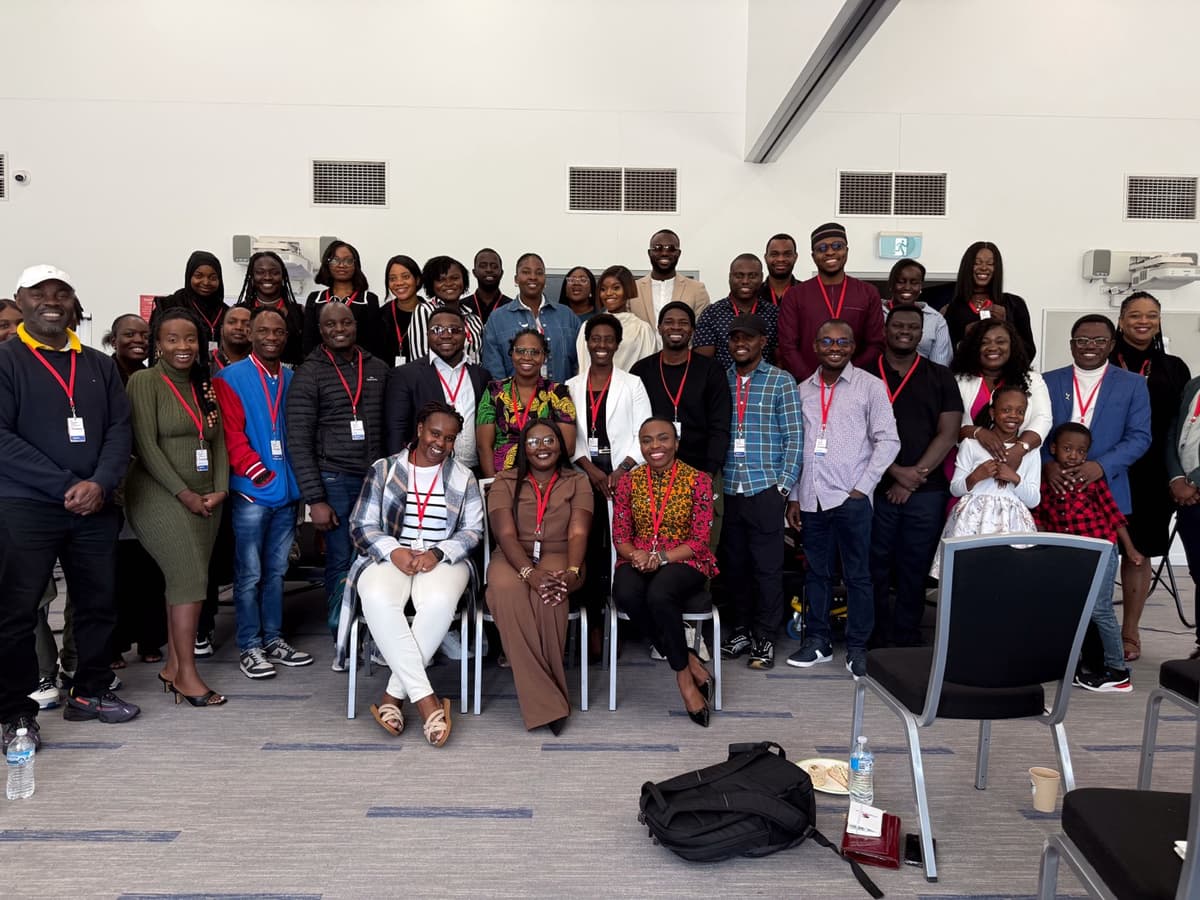
Over 250 immigrants have made career transitions with SyncSkills
See how others turned their overseas experience into Australian careers.
Read Success StoriesHere are a few illustrative examples of how this kind of transition can play out. These are hypothetical scenarios, not specific students.
The Care Worker Who Became a Business Analyst
Picture a disability support worker doing shifts: early mornings, late nights, weekends. The work is meaningful but physically exhausting, and they know it isn't sustainable long-term. By learning business analysis and agile skills and building a portfolio, they could position themselves for a professional tech role. Not because they have a tech degree, but because they learn to translate their care sector experience into business analysis language.
Their healthcare domain knowledge could become a competitive advantage. Companies building digital health platforms need people who understand clinical workflows AND technology.
The Accounting Graduate Who Pivoted to Tech
Consider someone who studied accounting overseas and has spent years trying to get it recognised in Australia. The professional accounting pathway can be demanding, competitive and expensive. Instead of spending another three years chasing CPA recognition, they could pivot to business analysis in financial services, where accounting knowledge gives an edge over BA candidates who don't understand financial products and regulatory requirements.
A pivot like this builds on years of study rather than throwing them away.
The Person Who Almost Gave Up
Picture someone who hits a period where things aren't clicking. Applications aren't converting. Confidence is shaken. They're ready to quit. If they stick with it, keep showing up, keep doing mock interviews and keep refining their approach, they give themselves the chance to turn a run of rejections into an offer.
As we always say in our community: there is no failure here. You go for one interview, it doesn't work, you pick yourself back up and go back to the drawing board. The people who win are the ones who refuse to stop.
The Career Change at 30 Action Plan
Stop overthinking. Start doing. Here's your framework.
Month 1: Foundation
- Define your target role. Business Analyst, Scrum Master, Project Coordinator, Change Analyst — pick one based on your natural strengths. If you're analytical and detail-oriented, lean BA. If you're people-oriented and love facilitation, lean Scrum Master.
- Start learning the fundamentals. Business analysis basics, agile methodology, core tools like Jira and Confluence.
- Audit your existing experience. Write down every skill from your current career that translates. You'll be surprised how much maps across.
Month 2: Skill Building
- Go deep on your chosen role. Learn requirements gathering, user stories, sprint ceremonies, stakeholder management.
- Learn AI tools. ChatGPT, Claude, and automation tools aren't optional in 2026. They're the multiplier that separates $80K candidates from $120K candidates.
- Build your portfolio. Work on case studies, sample deliverables, and real-world scenarios.
Month 3: Market Entry
- Optimise your LinkedIn. Your headline, summary, and experience need to speak the language of your target role. Not the language of your old career.
- Start networking. Attend meetups, engage on LinkedIn, reach out to people in your target role. The Australian job market is relationship-driven. Get in the room.
- Practice interviewing. Do mock interviews until you can answer behavioural questions with real examples using the STAR method. Practice until it feels natural, not rehearsed.
Month 4 and Beyond: Land and Launch
- Apply strategically. Not 200 random SEEK applications — targeted applications where you've researched the company and tailored your approach.
- Negotiate your offer. Don't accept the first number. Our students routinely negotiate $5,000 to $10,000 above the initial offer.
- Keep learning. The career change is the start, not the finish. Continue building skills, expanding your network, and growing your value.
---
You might also like
Frequently Asked Questions
Is 30 too old to change careers in Australia?
Not even close. Thirty is actually one of the best ages for a career change. You have enough professional experience to bring real value to a new role, enough energy to invest in learning, and enough career runway ahead for the investment to compound significantly.
What's the best career change at 30 for someone without a tech degree?
Business Analysis, Scrum Master, and Project Coordination roles are the most accessible career changes for people without tech degrees. These roles require analytical thinking, communication, and stakeholder management — not coding.
How long does a career change at 30 take in Australia?
With focused effort, most career changers can transition within 3 to 6 months. This includes learning foundational skills, building a portfolio, optimising their professional presence, and going through the interview process. Some land roles faster, others take longer — but the timeline is months, not years.
Can I change careers at 30 while working full-time?
Yes. Most of our students make the transition while working their current jobs. Evening classes, weekend study sessions, and AI tools that accelerate learning make it feasible to build new skills alongside full-time work. It's demanding, but temporary.
What salary can I expect after a career change at 30?
For career changers transitioning into Business Analyst or Scrum Master roles in Australia, starting salaries typically range from $80,000 to $110,000. With experience and skill development, this quickly grows to $120,000+ within 1-2 years.
Ready to make the move? Join our next free masterclass where we walk through the exact roadmap career changers at 30 are using to land six-figure tech roles in Australia — without starting from scratch.