"Is it possible if I don't want to relocate?"
"My challenge is I'm in WA. I'll be at work at that time."
"I'm in Canada. You're in Australia. Can you really support me from there?"
Location and time zone questions came up in 35 of the sales conversations we analysed, more than any other single topic, even cost. People in Perth, Darwin, Hobart, Tamworth and Toowoomba, and people still overseas, all want to know the same thing: does a career change actually work if I'm not in Sydney, Melbourne or Brisbane?
Short version: the learning works from almost anywhere. Where you can land a $120K-level role depends more on where you have work rights and how you position yourself than on your postcode.
Quick answer
Yes, you can change careers from Perth, regional Australia or overseas if the program runs live online with recordings. From Perth, evening Queensland classes fall in the mid-afternoon. Regional Australians can land professional roles locally or remotely. Overseas, you can learn the skills, but Australian salaries generally go to people with Australian work rights.
Key facts at a glance
- Queensland, the Northern Territory and Western Australia don't observe daylight saving, and Western Australia runs on UTC+8 (australia.gov.au), two hours behind Queensland all year.
- A live class at 5pm Queensland time is 3pm in Perth year round, and 6pm in Sydney, Melbourne and Hobart during daylight saving.
- Skills are portable, but salaries reflect the local economy. An offshore employer or contractor rarely pays Australian professional rates.
- Many professional roles are hybrid, and some employers allow remote work once you've proven your value, even when the ad didn't say remote.
- According to SyncSkills' Graduate Outcomes Report, across 28 documented graduates the median time from starting the program to landing a role was 4.5 months, with graduates in Tasmania, the Northern Territory, South Australia, NSW, Victoria and beyond.
Updated November 2026.
Learning online from anywhere: what actually matters
When people ask "can I do this from Perth?", they're usually asking three things. Can I attend? Will I fall behind if I can't? Will I feel alone?
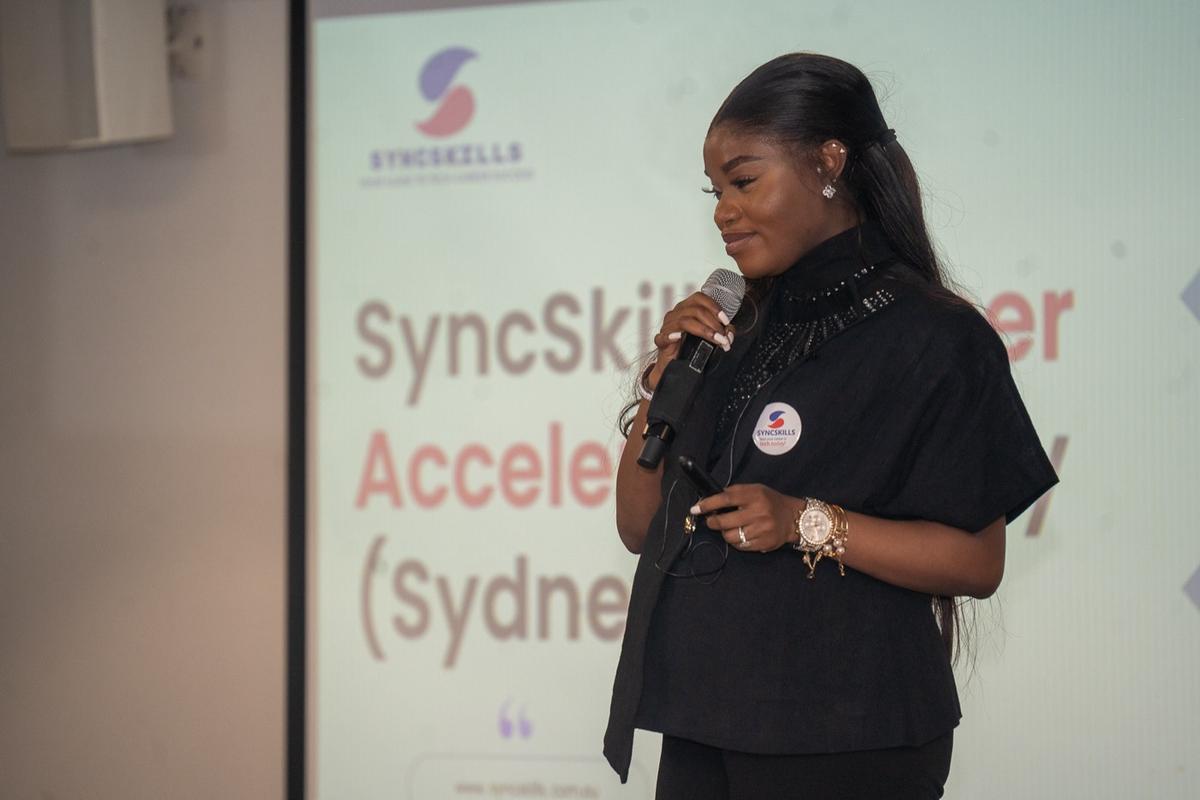
At SyncSkills, classes are live online on Thursdays and Fridays, 5 to 8pm Queensland time, and every session is recorded with lifetime access. That's the structure at the time of writing. We answer this question on almost every webinar. Tayo's version: "Is this a physical training? No. You get the opportunity to join from anywhere in Australia. That's why we've got the biggest community. People from Melbourne, Sydney, South Australia, everywhere."
But recordings aren't a substitute for doing the work. Tayo is honest about this too: "No one learns anything just by listening to it once." Recordings help you catch up and revise. The practical work, team projects and presentations are where the skills actually stick, so plan to join live when you can.
Here's how a 5 to 8pm Queensland class lands across Australia:
| Location | During daylight saving (roughly Oct to Apr) | Rest of the year |
|---|---|---|
| Brisbane, Queensland | 5pm to 8pm | 5pm to 8pm |
| Sydney, Melbourne, Canberra, Hobart | 6pm to 9pm | 5pm to 8pm |
| Adelaide | 5:30pm to 8:30pm | 4:30pm to 7:30pm |
| Darwin | 4:30pm to 7:30pm | 4:30pm to 7:30pm |
| Perth | 3pm to 6pm | 3pm to 6pm |
If you're in Perth or WA
The WA objection is real. One prospect told us she works Monday to Friday, 9am to 4pm, and wasn't sure she could attend live classes during work hours. A 3pm start in Perth does clash with a standard workday.
What people in WA do:
- Join the second half live and watch the first half back. A 3pm to 6pm class means the last hour or two often fits after work.
- Use flexible hours on class days. Many workplaces allow an early start and early finish twice a week, especially for study.
- Treat recordings as a plan, not a backup. Block two fixed slots a week for the recording and the practical task, and protect them like a shift.
- Get the team work done asynchronously. Small project teams can share work in collaboration tools between sessions.
In the conversations we've had, several WA prospects only needed to hear "classes are recorded and you can catch up" to move forward. It's a scheduling problem, not a dealbreaker.
If you're in regional Australia
People in regional towns often hear "there are no corporate jobs here." That's rarely the full story. Regional councils, state government agencies, universities, health services and utilities all run projects that need business analysts, project managers and change professionals.
Our graduates have been hired by employers including Homes Tasmania, Tamworth Regional Council, the Northern Territory Government and Charles Darwin University, alongside metro employers. Psalm Adams moved into a business analyst role with a Darwin company. Fadilat Akintayo, a new mum who had been working below her skill level, became a Senior Business Analyst with a South Australian company, and said: "I shared the news with my dad and told him to start calling me a Senior Business Analyst. Despite the challenges of being a new parent, this was doable."
Regional job searching works a little differently:
- Fewer ads, less competition per role. You'll see fewer listings, but often fewer strong applicants too.
- Relationships matter more. In smaller markets, people know each other. Calling the hiring manager and showing local commitment counts.
- Remote roles widen your options. Some metro employers hire regional staff for hybrid or remote roles, especially once you've proven yourself.
If you're on a regional visa, the visa side is a separate question for a registered migration agent. Our 491 visa regional pathway guide and best regional cities for immigrant careers resource cover the background.
Remote roles: the right way to think about them
Many people in Perth or the regions want a fully remote job so location stops mattering. Tayo's advice flips the question. "The focus shouldn't be getting a work-from-home role. The focus should be becoming so skilled that work from home becomes an easy part of that conversation."
She speaks from experience. When she landed her first professional role, she was living in Tasmania. The role hadn't been done outside Melbourne before and wasn't advertised as remote. They let her do it from Tasmania because she could deliver. "Display value first," she says, "and everything will align."
So yes, search for remote roles. Our guide to remote jobs in Australia shows where they are. But don't limit yourself to ads that say "remote." Apply for strong roles, prove yourself, and negotiate flexibility from a position of value.
If you're overseas
This is where we need to be most honest. A Canadian-based prospect once worried that we couldn't support her from Australia. Another lead wanted to know whether the opportunities in our messaging would still be available if she returned to Nigeria.
Noah's answer when someone asked whether a person in Nigeria could do this and earn $120K: "Yes, they can learn the skill. It follows you everywhere." But then: "If they're going to get a 120K job from Nigeria? That's going to be challenging. They're offshore. Companies won't pay offshore people 120K. They reflect the reality of the economy here."
So the honest framing is:
| Your situation | What's realistic |
|---|---|
| Overseas, moving to Australia soon with work rights | Start building skills and evidence now, so you arrive ready to apply |
| Overseas, no plan to move | You can learn valuable skills, but pay will reflect your local market |
| In Australia with work rights, anywhere | Full access to Australian roles, on-site, hybrid or remote |
| In Australia on a temporary visa | Check your work conditions with a registered migration agent, then plan |
We're not migration agents. If your plan depends on a visa outcome, get professional migration advice first.
Making it work: a practical setup
Wherever you are, the people who succeed online tend to have the same setup:
- A fixed weekly study rhythm. Same days, same times, written in the family calendar.
- A quiet space and a reliable laptop. You'll present work and join team calls, so a phone isn't enough.
- One live session a week, minimum. Even if you watch the rest back, live participation builds confidence and relationships.
- Active use of the community. Ask questions, share drafts, join team projects. Distance makes this more important, not less.
- A local job search strategy. Know the major employers within commuting distance and the sectors that hire there.
At SyncSkills we teach MSEP: Mindset, relevant Skills, proven Experience and Positioning. None of those depend on your postcode. Positioning for your local market is the part that changes, and it's the part most people skip.
Frequently Asked Questions
Can I do an online career change program from Perth?
Yes. If classes run live in the evening Queensland time, they'll fall in the mid-afternoon in Perth because WA is two hours behind Queensland all year and neither observes daylight saving. Choose a program that records every session, then plan to join part of the live class and catch up on the rest at fixed times each week.
Can I get a business analyst job in regional Australia?
Yes. Regional councils, state government agencies, universities, health services and utilities all need business analysts and project professionals. There are fewer ads than in capital cities, but often fewer strong applicants per role. Our graduates have been hired by regional employers including Homes Tasmania, Tamworth Regional Council and the Northern Territory Government.
Can I study from overseas and get a $120K job in Australia?
You can build the skills from overseas, and that can give you a head start before you arrive. But Australian employers generally pay Australian salaries to people who have Australian work rights and work here. If you're overseas with no plan to move, expect pay to reflect your local market rather than Australian rates.
Will I miss out if I can't attend live classes?
You'll miss some interaction, but recordings mean you won't miss the content. The key is to treat recordings as part of a plan, with fixed times each week to watch and complete the practical work. Join live whenever you can, even for part of a session, because presenting and team work build the skills employers test in interviews.
Do I need to move to a capital city to get a professional job?
Not necessarily. Many roles are available in regional centres, and hybrid or remote arrangements are common in professional roles once you've proven your value. Some people do choose to move for a specific opportunity. Decide based on the roles available in your area and the life you want, not on the idea that capital cities are the only option.
Talk to us
If you want to know whether a career change works from where you live, watch the free training at syncskills.com.au/f/webinar, book a call at syncskills.com.au/book-a-call, or call or WhatsApp the team on 0493 315 746. You can also see where our graduates are working on the success stories page, and read about the hidden job market in Australia.