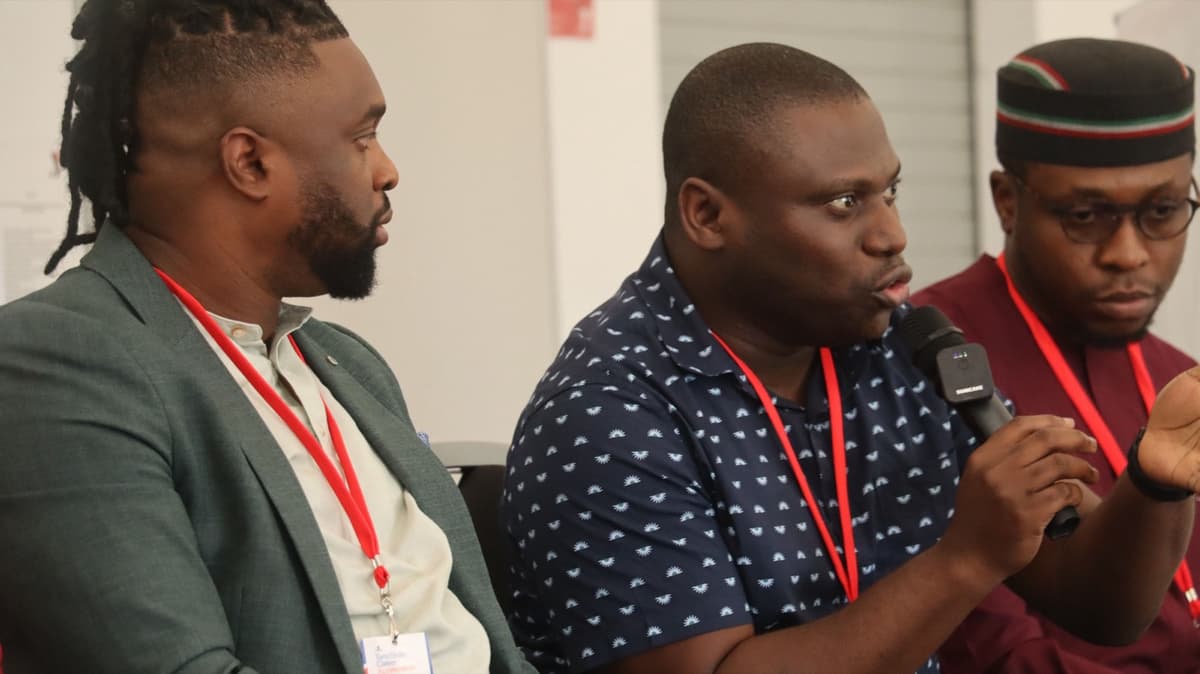
When I came to Australia five years ago with a business analyst background, everyone told me the same thing: "Get any job first, then worry about career later." I spent months applying for $60K roles, getting rejected because my overseas experience "didn't translate."
Fast-forward to today, and I'm watching former students earn $150+ per hour as AI freelancers while corporate Australia scrambles to catch up with AI transformation. Here's what nobody tells you about AI freelancing Australia: the market isn't just ready — it's desperate for skilled practitioners who can actually deliver results.
The traditional freelancing playbook is dead. Graphic designers compete with Canva, writers battle ChatGPT, and web developers fight page builders. But AI freelancing? That's the opposite game. You're not competing with AI — you're becoming the bridge between AI capabilities and real business problems.
The Reality of AI Freelancing Australia in 2024
Australian businesses are sitting on a goldmine they don't know how to mine. According to recent industry reports, 73% of Australian companies want to implement AI solutions but lack the internal expertise. They've got budgets, they've got problems, but they don't have people who speak both business and AI fluently.
This creates what I call the "implementation gap" — the space between AI possibility and business reality. That gap is worth millions, and it's where skilled freelancers are making serious money.
During our recent project sessions, I watched Edwin demonstrate an NDIS connector system that automates participant matching with service providers. The technical complexity wasn't the hard part — it was understanding the business requirements, translating them into AI-powered workflows, and creating acceptance criteria that actually worked in pre-production environments.
That's not something you learn from YouTube tutorials. It's the intersection of business analysis, AI implementation, and real-world testing. And it's exactly what Australian companies pay premium rates for.
The best part? Remote work isn't an "icing on the cake" anymore — it's standard practice. I know multiple students working entirely remotely for Australian companies, earning $120-180 per hour, without ever mentioning remote work was a requirement. Companies simply assumed that's how AI work gets done.
Building Your AI Freelancing Foundation (Without the BS)
Forget the guru nonsense about "just learn Python and you're ready." AI freelancing success comes down to three core competencies: technical execution, business translation, and delivery reliability.
Technical Execution means you can actually build things that work. Not impressive demos that break in production. During our mock interview sessions, candidates who could walk through real testing scenarios — explaining pre-production environments, user stories, and acceptance criteria — those are the ones landing $100+ hour contracts.
Business Translation is your secret weapon. Australian executives don't care about your machine learning algorithms. They care about reducing customer service costs by 40% or automating invoice processing that currently takes their team 20 hours per week. You need to speak ROI, not technical jargon.
Delivery Reliability separates professionals from hobbyists. When you say you'll deliver a working solution by Friday, it works on Friday. In pre-production. With proper testing. With documentation. This is non-negotiable at premium rates.
The pathway isn't complicated: pick one business domain (healthcare, finance, logistics), master the AI tools that solve problems in that space, then become the go-to person for that intersection. Don't try to be everything to everyone — be indispensable to someone specific.
If you're serious about building sustainable income streams, our guide on How to Build a $100K Business Using AI in 2026 breaks down the exact framework successful students are using to scale beyond hourly work.
The Premium AI Freelancing Australia Market Opportunities
The money isn't in basic chatbot builds or simple automation scripts. Premium AI freelancing happens in three specific areas where Australian businesses have budget but lack expertise.
Process Intelligence and Optimization is where former business analysts are crushing it. You take existing business processes, identify bottlenecks using AI-powered analytics, then design automated solutions that actually integrate with their current systems. One student just completed a project for a logistics company — $45K for a three-month engagement that reduced their dispatch time from 4 hours to 30 minutes.
Custom AI Implementation for Compliance-Heavy Industries is pure gold. Healthcare, finance, legal services — these sectors need AI solutions that work within strict regulatory frameworks. They can't just plug in off-the-shelf tools. They need custom implementations that meet Australian compliance requirements. Rate range: $150-250 per hour, project sizes $20K-80K.
AI Strategy and Change Management combines technical skills with business transformation expertise. You're not just building the solution — you're helping entire organizations adapt to AI-powered workflows. This includes staff training, process redesign, and ongoing optimization. It's consulting work that pays consulting rates: $200+ per hour.
The key insight? Australian businesses aren't buying AI tools — they're buying business outcomes that happen to use AI. Position yourself as the outcome provider, not the tool installer.
For those considering broader AI business applications, check out our comprehensive guide on AI Skills For Business Owners to understand what your potential clients are actually trying to achieve.
From Employee to AI Freelancer: The Practical Transition
Here's what actually works for making the transition without burning bridges or bank accounts:
Phase 1: Skill Validation (Months 1-2) Build three real projects that solve actual business problems. Not tutorials — real implementations you can demo and explain. Focus on one industry where you already have domain knowledge. Your current job gives you insights into business problems that pure tech people miss.
Phase 2: Network Development (Months 2-3) Start with your existing professional network. The accounting firm that did your taxes? They need invoice automation. Your doctor's practice? Patient scheduling optimization. Your kid's school? Administrative workflow improvements. Existing relationships trust you to deliver.
Phase 3: Portfolio Projects (Months 3-4) Take on 2-3 small projects at below-market rates ($50-70/hour) to build case studies and testimonials. Document everything: problem statement, solution architecture, business impact, client feedback. These become your premium portfolio pieces.
Phase 4: Premium Positioning (Months 4-6) Raise your rates to market level ($100-150/hour) and start targeting larger projects. You now have proven results, real testimonials, and the confidence to have premium pricing conversations.
The transition timeline isn't theoretical — it's based on watching dozens of students make this exact journey. The ones who succeed treat it like a business launch, not a career change. They plan, execute, measure, and adjust based on real market feedback.
Those interested in the consulting angle should explore our detailed guide on AI Consulting Business Australia which covers the higher-level strategic work that often develops from successful freelancing relationships.
Avoiding the AI Freelancing Traps That Kill Businesses
Most AI freelancers fail within six months. Not because they lack technical skills — because they make predictable business mistakes that destroy profitability and credibility.
Over 250 immigrants have made career transitions with SyncSkills
See how others turned their overseas experience into Australian careers.
Read Success StoriesThe "Latest Shiny Object" Trap: Chasing every new AI tool instead of mastering the ones that actually generate business value. I've seen freelancers spend weeks learning the latest LLM fine-tuning techniques while their clients just needed reliable data extraction from PDFs. Stay focused on business outcomes, not technical novelty.
The "Hourly Rate" Prison: Trading time for money is not a business model — it's employment with extra stress. Smart AI freelancers package solutions, not hours. Instead of "I'll build your chatbot for $80/hour," try "I'll reduce your customer service costs by 40% for $15K over three months." Same work, different positioning, 3x the profit.
The "Technical Perfectionist" Problem: Building 98% solutions that never ship versus 80% solutions that generate immediate ROI. Australian businesses want improvements that work this quarter, not perfection that launches next year. Ship fast, iterate based on real usage, improve continuously.
The "Scope Creep" Nightmare: Not defining project boundaries upfront leads to endless revisions and feature additions that kill profitability. Every project needs crystal-clear acceptance criteria — what gets built, what success looks like, what's explicitly out of scope.
The most successful AI freelancers I know treat each project like a mini-consulting engagement: clear scope, defined outcomes, fixed pricing, regular progress reviews. They're not selling their time — they're selling business transformations that happen to use AI.
If you're looking at broader automation opportunities beyond freelancing, our guide on AI Automation For Small Business shows how these same principles apply to building scalable service offerings.
The Long-Term AI Freelancing Australia Strategy
Freelancing isn't the endgame — it's startup capital for something bigger. The smartest practitioners use high-value freelancing to fund their transition into AI consulting firms, SaaS products, or specialized service businesses.
Year 1-2: Master the Craft Focus purely on delivering exceptional results for clients. Build reputation, refine processes, identify the highest-value problem patterns. This is your learning laboratory funded by client work.
Year 2-3: Productize Solutions Package your most successful implementations into repeatable solutions. That custom logistics optimization system? Turn it into a configurable platform you can deploy across similar companies in weeks, not months.
Year 3+: Scale Beyond Self Build a team of specialists, develop proprietary tools, create training programs. You're no longer a freelancer — you're a specialized AI implementation firm with proven methodologies and case studies.
This isn't hypothetical. I'm watching former students execute this exact progression. They started with $60/hour freelance projects and now run agencies billing $300K+ annually. The key? They treated freelancing as business development, not just income generation.
The AI freelancing opportunity in Australia won't last forever. As more people recognize the potential, competition will increase and rates will normalize. But right now, in 2024, skilled practitioners who can deliver real business value have a massive head start.
For those ready to explore side opportunities while building their main business, check out our collection of AI Side Hustle Ideas 2026 for additional revenue streams that complement freelancing work.
---
You might also like
Frequently Asked Questions
What technical skills do I actually need for AI freelancing in Australia?
You don't need a PhD in machine learning. Focus on business-applicable tools: Python for automation, cloud platforms (AWS/Azure) for deployment, API integration skills, and whatever industry-specific tools your target market uses. The secret weapon is understanding business processes well enough to identify where AI adds genuine value. Technical depth matters less than implementation reliability.
How do I price AI freelancing projects without undervaluing my work?
Never compete on price — compete on outcomes. Research what the business problem costs them currently (manual hours, error rates, missed opportunities), then price your solution at 20-40% of that annual cost. A logistics company spending $200K yearly on manual dispatch coordination will happily pay $40K for automation that reduces that by 80%. Price the transformation, not your time.
Can I really earn $100+ per hour as an AI freelancer in Australia?
Absolutely, but not immediately. Entry-level AI work starts around $50-70/hour. Premium rates come from proven results, specialized industry knowledge, and the ability to handle complex implementations. Students with 6-12 months of solid project experience routinely command $120-180/hour for specialized work. The key is positioning yourself as a business problem solver who uses AI, not an AI technician looking for work.
Should I focus on local Australian clients or work globally?
Start local for relationship building and market understanding, then expand globally for scale. Australian businesses often prefer working with local providers for communication, time zones, and regulatory compliance. Use local projects to build case studies and refine your processes, then leverage those proven methodologies for international clients who value results over location.
How do I transition from my current job to AI freelancing without financial risk?
Start with weekend and evening projects while maintaining your salary. Build 2-3 solid case studies and establish monthly recurring income of at least 50% of your current salary before making the jump. Use your current industry knowledge as your competitive advantage — you understand business problems that pure technical people miss. The transition typically takes 4-6 months of parallel execution.
Ready to turn your AI skills into a premium freelancing business?
The Australian market is hungry for skilled AI practitioners who can deliver real business results. Don't wait until the opportunity passes or competition increases.
At SyncSkills, we've helped hundreds of professionals successfully transition into high-value AI freelancing careers, with many earning $100+ per hour within their first year.